Subclass 173 – Contributory Parent (Temporary) Visa
VEMVisa | Australian Parent Migration
A practical guide to the temporary Contributory Parent pathway, including the paper application, two-part visa charge, Medicare access, parent visa queue and transition to permanent subclass 143.
The subclass 173 visa, formally the Contributory Parent (Temporary) visa, allows an eligible parent of a settled Australian citizen, Australian permanent resident or eligible New Zealand citizen to live in Australia temporarily for up to two years.
It is primarily a staged pathway to the permanent Contributory Parent visa subclass 143. The two-stage route spreads government charges over a longer period, but Home Affairs states that it costs more overall than applying directly for subclass 143 and remains subject to capping and queueing.
Reviewed 22 July 2026: Home Affairs currently lists the subclass 173 cost from AUD33,375 over two instalments for one standard applicant. New Contributory Parent applications are currently estimated at about 15 years. Initial subclass 173 applications remain paper-based and do not create an associated Bridging Visa.
Official visa page
Confirm eligibility, application forms, location rules and current instructions.
Subclass 173 is a temporary two-year Parent visa and a possible first stage before permanent subclass 143.
What is a Subclass 173 visa?
The Contributory Parent (Temporary) visa is part of Australia’s Family visa program. It is designed for parents who satisfy the Parent visa criteria but prefer to divide the contributory charge between a temporary stage and a later permanent stage.
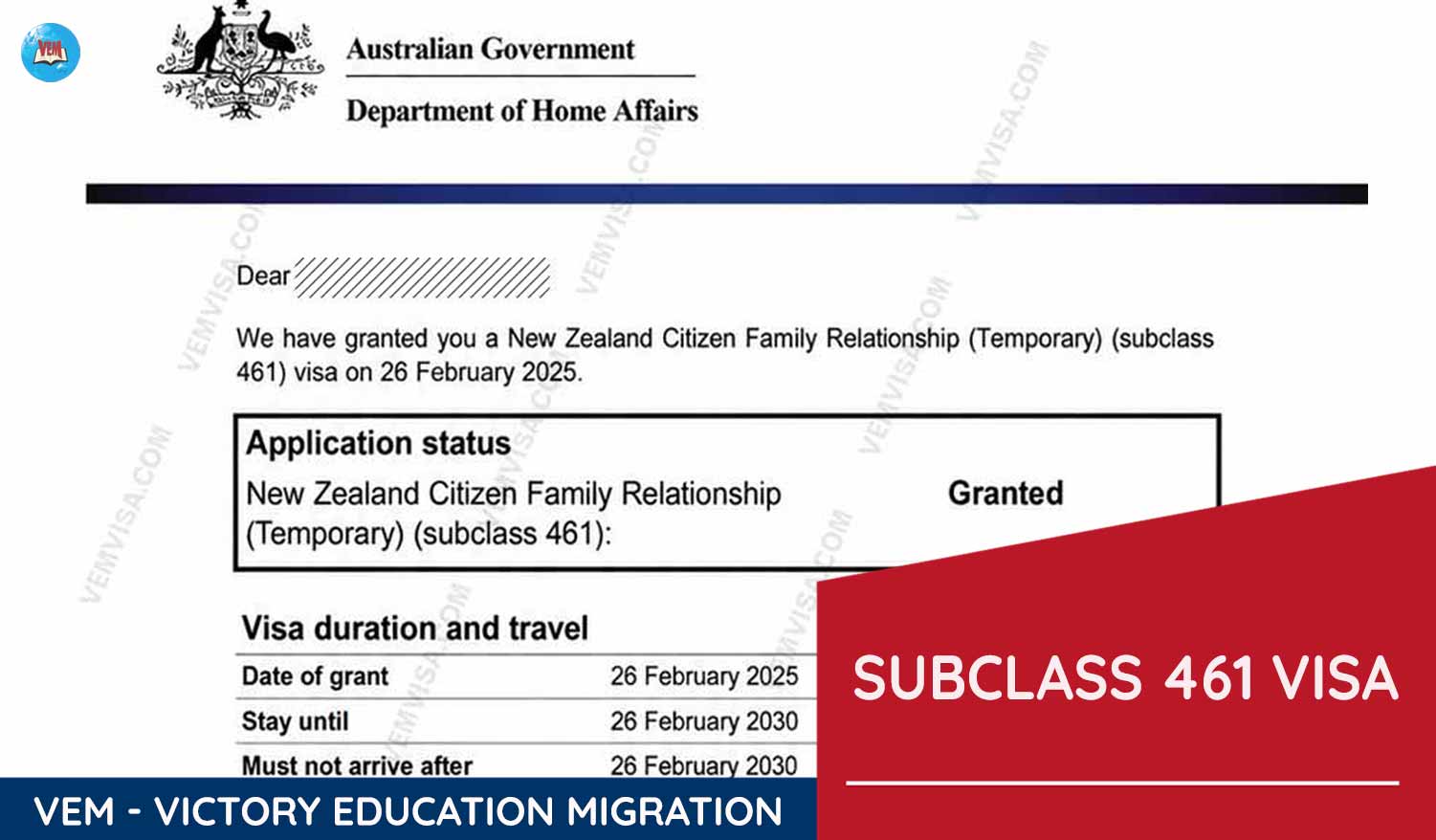
The visa allows a stay of up to two years. Its period begins on the date the holder first enters Australia after grant, and it provides multiple travel during that period. It cannot be extended or renewed by applying for another subclass 173 visa.
Feature
Subclass 173
Planning implication
Visa status
Temporary
It is not permanent residence and does not by itself lead automatically to citizenship.
Stay period
Up to two years from first entry after grant
The family should prepare the subclass 143 stage early rather than waiting for expiry.
Application method
Paper application by post or courier
The initial 173 application is not lodged through ImmiAccount.
Bridging Visa
Not attached to the subclass 173 application
An onshore applicant must keep another valid visa or leave Australia.
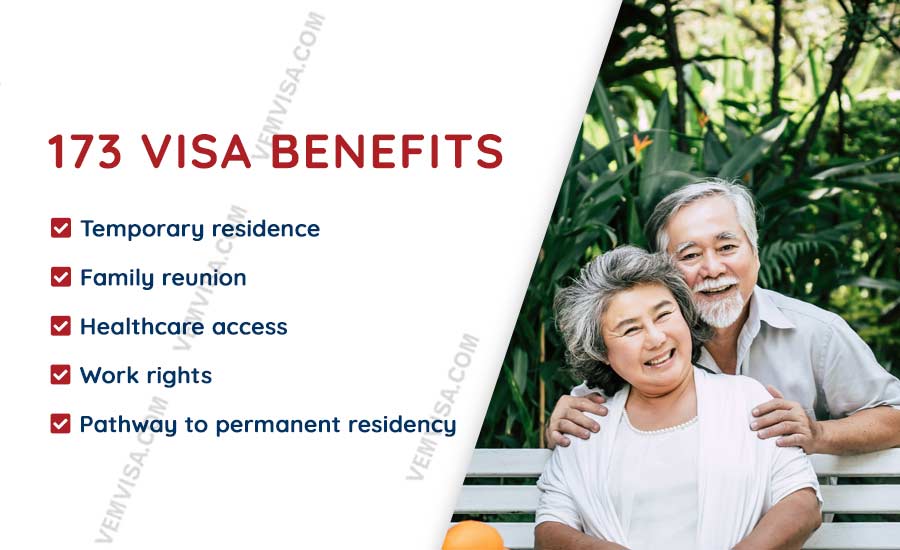
Benefits and limitations of the 173 visa
Live in Australia temporarily
Stay for up to two years and travel to and from Australia while the visa remains valid.
Work and study
Work and study in Australia, although government study support is not provided through this visa.
Access Medicare
Eligible subclass 173 holders in Australia can apply to enrol in Medicare under a Ministerial Order.
No automatic permanent residence
The holder must lodge an eligible subclass 143 application; permanent residence is not granted automatically.
Cannot extend subclass 173
Home Affairs does not allow a holder to extend or reapply for the same temporary visa.
Still capped and queued
Paying the contributory charge does not remove the Parent visa cap or create a fixed decision date.
The visa provides temporary residence, work, study and Medicare access, but it cannot be extended.
Subclass 173 visa requirements
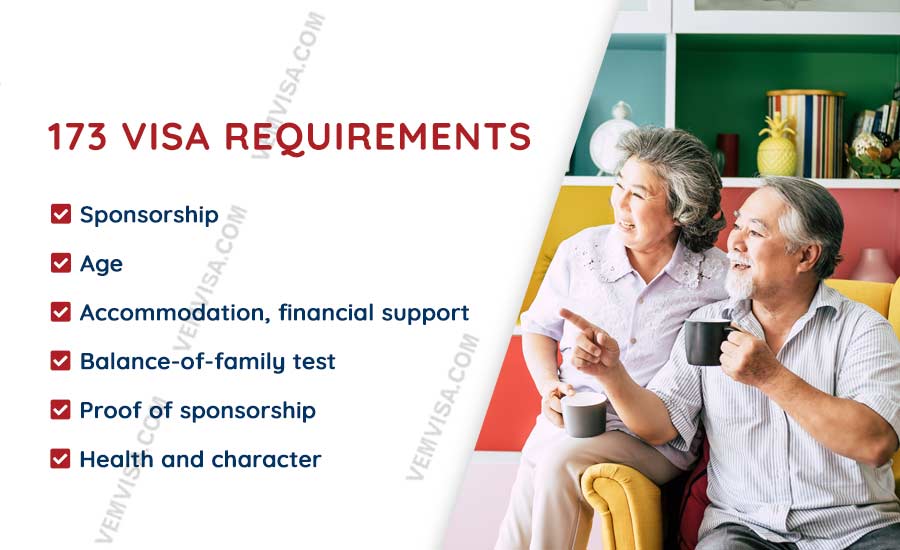
Eligibility is assessed under the law and the applicant’s individual circumstances. The main requirements generally include:
Have an eligible child who is a settled Australian citizen, Australian permanent resident or eligible New Zealand citizen.
Have an eligible sponsor whose sponsorship Home Affairs approves.
Meet the Balance of Family Test.
Meet health and character requirements, including any requirements applied to relevant family members.
Have repaid Australian Government debts or have an approved repayment arrangement.
Not already hold or have applied for the Sponsored Parent (Temporary) visa subclass 870.
Be eligible to lodge from the chosen location and address any No Further Stay condition before applying in Australia.
Provide correct forms, certified documents and the first visa-charge instalment.
Visa refusal or cancellation history is not a simple automatic checklist item. Home Affairs considers immigration history and statutory limitations. A person with a previous refusal, cancellation or complex status issue should obtain advice before lodging.
Who can sponsor a Contributory Parent visa 173?
The sponsor is normally an eligible settled child who is at least 18. Home Affairs can also accept other arrangements where the child is under 18, including an eligible relative, guardian or qualifying community organisation.
Possible sponsor
Typical criteria
Evidence to plan
Adult child
Eligible status, usually at least 18, settled and ordinarily resident in Australia
Identity, citizenship or residence status, address history and parent-child relationship.
Eligible relative or guardian
May be available when the sponsoring child is under 18
Status, age, relationship or guardianship and settled-residence evidence.
Community organisation
Must meet Home Affairs requirements and have a qualifying connection with the child
Registration, authority to sponsor, financial capacity and evidence of the connection.
The sponsor completes Form 40 — Sponsorship for migration to Australia. Sponsorship and the later Assurance of Support for permanent subclass 143 are separate concepts; the same person does not necessarily perform both roles.
Eligibility includes sponsorship, the Balance of Family Test, health, character and valid lodgement requirements.
Balance of Family Test for visa 173
A parent satisfies the test where at least half of their children and stepchildren are eligible children, or where more eligible children live in Australia than in any other single country. The test is prescribed and cannot be waived merely because a family has compelling personal reasons.
Prepare a complete family map that identifies every child and stepchild, their country of permanent residence and their Australian status. Birth certificates, adoption records, marriage histories, death certificates and status evidence can affect how the calculation is made.
Second-stage advantage: a subclass 173 holder has already passed the Balance of Family Test. Home Affairs states that it does not need to be met again when the eligible subclass 143 application is lodged before the temporary visa ceases.
How the subclass 173 to 143 pathway works
Subclass 173 is not simply a two-year visit visa. Its main strategic purpose is to form the first stage of the permanent Contributory Parent pathway.
1. Lodge a valid subclass 173 application
Meet sponsorship and family-balance requirements, submit the paper forms and enter the Contributory Parent queue.
2. Receive the temporary visa
Enter Australia by the date in the grant letter. The two-year period begins on first entry after grant.
3. Lodge subclass 143 before expiry
Home Affairs encourages eligible holders to lodge the permanent stage immediately after the 173 grant rather than waiting until the end of the two years.
4. Complete permanent-stage requirements
Pay the applicable subclass 143 charges when requested, obtain the Assurance of Support and provide any updated health, character or family evidence.
Do not treat the expiry date casually. A holder who applies while holding subclass 173, or within the limited period recognised by the permanent-stage rules, may qualify for the staged pathway. A late application can create different criteria, charges and legal issues.
Subclass 173 document checklist
The exact evidence depends on the family. A practical working checklist includes:
Applicant identity and civil status
Passport and national identity records
Birth, marriage, divorce and name-change evidence
Four current passport photographs for each included person
Parent-child relationship
Birth or adoption certificates
Step-parent and prior-relationship records
Evidence connecting names across documents
Balance of Family evidence
Details of every child and stepchild
Citizenship, permanent residence and country-of-residence evidence
Evidence for any child excluded from the calculation
Sponsor documents
Form 40
Identity and Australian status
Evidence the sponsor is settled and resident in Australia
Health and character
Health examinations when directed
Original police certificates when requested
Military or service records where relevant
Family members
Form 47A for each family member aged 18 or over where required
Dependency evidence for included adult children
Health and character documents for migrating and requested non-migrating members
Non-English documents need English translations. Follow the official certification rules: police certificates are generally provided as originals, while other evidence is supplied as certified copies. Keep a complete copy of the entire paper application.
How to apply for a subclass 173 visa
Paper application only: online lodgement is not available for temporary Contributory Parent applications. The initial subclass 173 application is not lodged in ImmiAccount Australia.
Check legal eligibility and location: you may apply in or outside Australia, but not in immigration clearance. Deal with any No Further Stay condition before lodging.
Complete Form 47PA: Application for a parent to migrate to Australia.
Complete sponsorship forms: the sponsor completes Form 40, and relevant adult family members complete Form 47A.
Assemble certified evidence: include the required relationship, family-balance, identity, sponsor and payment documents.
Pay the first instalment: use an accepted payment method and include proof as instructed.
Send the package: lodge by post or courier to the address shown on the current form. You cannot lodge in person.
Keep your lawful status: an onshore application does not create a Bridging Visa. Maintain another valid visa or leave Australia.
Be outside Australia for the decision: Home Affairs requires the applicant to be offshore when it decides the subclass 173 application.
Do not confuse being allowed to lodge in Australia with a right to remain there. The 173 application has no associated Bridging Visa. Check the expiry and conditions of the visa you currently hold through VEVO and visa-status tools.
Subclass 173 remains a paper application submitted by post or courier, not an online ImmiAccount application.
Subclass 173 visa cost in 2026
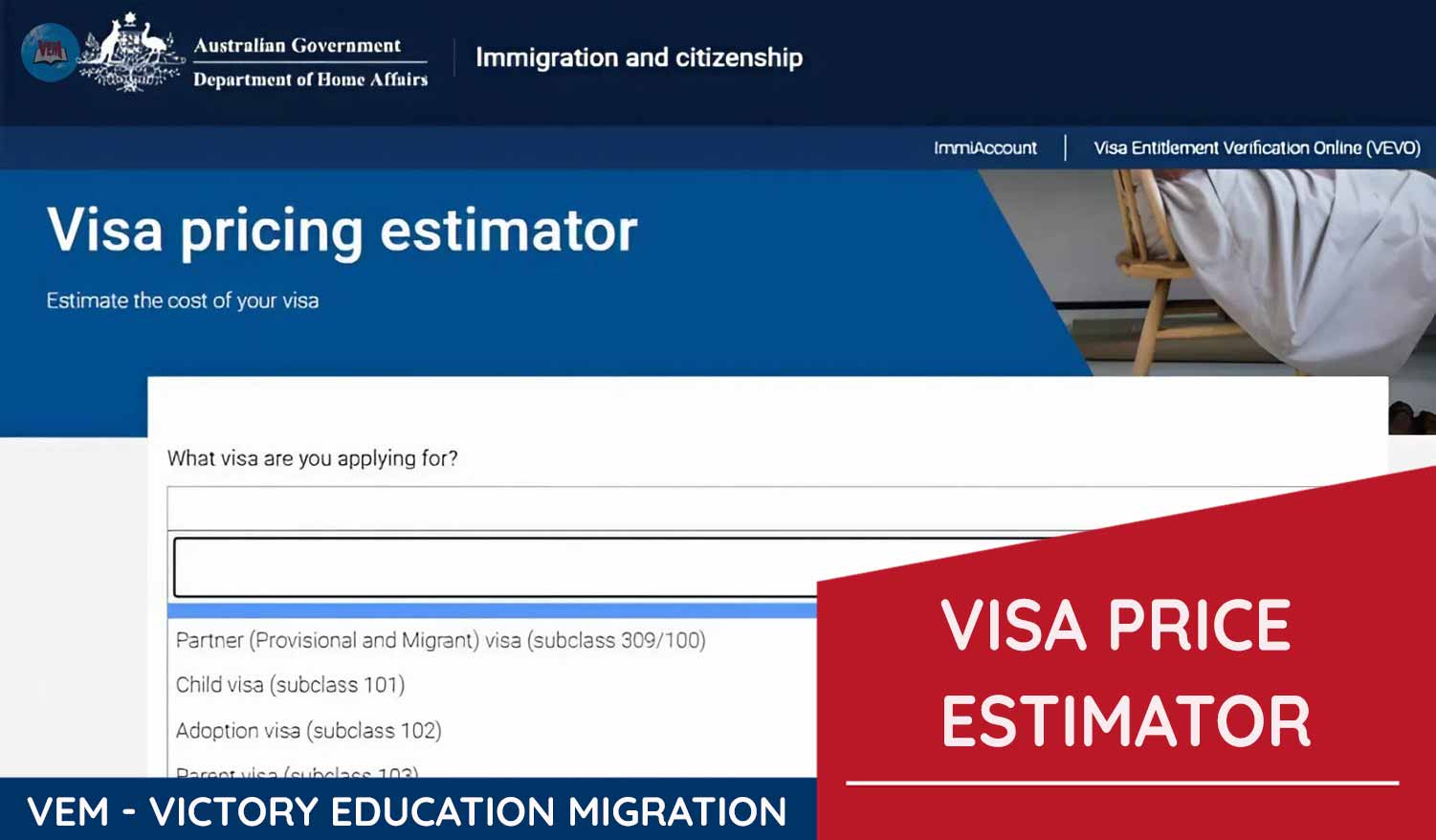
From 1 July 2026, Home Affairs lists the standard starting charge for one applicant at AUD33,375, paid in two instalments. The amount payable depends on the age and position of each applicant, concessions, the passport used and the pricing rules at the date of valid lodgement.
Applicant category
First instalment
Second instalment
Indicative total
Main applicant
AUD4,245
AUD29,130
AUD33,375
Additional applicant aged 18 or over
AUD2,125
Generally AUD29,130
Generally AUD31,255
Eligible dependent child under 18
AUD1,065
AUD2,095 under the applicable pricing rule
AUD3,160
Related costs
Health examinations, police certificates, translations, biometrics, payment surcharges and professional fees are separate.
A lower visa cost can apply from 1 July 2026 to eligible citizens of specified Pacific countries and Timor-Leste who lodge with a valid passport. Always verify the current Home Affairs pricing table immediately before payment.
Second-stage budget: the AUD33,375 figure covers the subclass 173 application only. Moving to permanent subclass 143 requires a separate application and further charges, including a substantial second instalment and an Assurance of Support at the permanent stage.
173 visa processing time and current queue position
There is no reliable short service standard for the 173 visa processing time. The visa is capped and queued. Home Affairs initially assesses whether the application meets the core criteria for a queue date and later releases queued applications for final processing as places become available.
For new Contributory Parent applications, Home Affairs currently estimates approximately 15 years. This is a planning estimate and not a guaranteed decision date.
Official milestone
Home Affairs position
Meaning
New application acknowledgement
Approximately four weeks
Acknowledgement is not queue assessment or final processing.
Queue assessment activity
Subclass 173 applications lodged around November 2023
The Department was assessing these applications against core queue criteria.
Final processing release
Lodged or queued up to November 2018
These cases had been released for final processing as at 31 May 2026.
New-application estimate
15 years
An estimate based on current places and application volumes.
A complete application can avoid document-related delay and refusal at queue assessment, but no adviser can lawfully guarantee faster release from the statutory queue. Review VEM’s broader guide to Australian visa processing times and always prioritise the official Parent visa queue page.
Medicare, government support and Assurance of Support
Medicare during subclass 173
Services Australia includes subclass 173 among temporary visas covered by a Ministerial Order. Eligible holders living in Australia can apply to enrol and must provide the required identity and travel-status documents.
Government support
Medicare enrolment does not mean the visa holder receives government income support, subsidised education or every permanent-resident benefit.
Assurance of Support at stage 143
The permanent subclass 143 stage generally requires a 10-year Assurance of Support. Do not confuse that later obligation with the temporary visa’s Medicare access.
Read the current Services Australia Medicare instructions. Eligibility must be assessed by Services Australia; a visa grant does not replace the enrolment process.
Compare subclass 173 with other Parent visa options
The staged route is useful for spreading payments, but it is not always the lowest-cost or simplest option. Compare the complete pathway, not just the first-stage fee.
Temporary then permanent, onshore aged-parent route
Contributory charges and Parent queue
Applicant must meet the Australian Age Pension age requirement and onshore criteria.
For a short family visit rather than Parent migration, review the Australian Visitor visa. A visitor visa is not a substitute for a permanent-parent strategy and usually does not permit work.
Should you use a 173 parent visa lawyer or migration agent?
Searches for a “173 parent visa lawyer” often reflect concern about family composition, previous refusals, No Further Stay conditions, unlawful status or the timing of the 143 transition. In Australia, immigration assistance can be provided by a registered migration agent, an Australian legal practitioner or an exempt person.
Situation
Support that may fit
What to verify
Standard eligibility, family-balance calculation and document preparation
Registered migration agent or Australian legal practitioner
Current registration or practising status, written scope, fees and who will personally handle the case.
Cancellation, refusal, review, court proceeding or complex statutory bar
Australian legal practitioner with relevant immigration experience may be appropriate
Whether the adviser is retained for visa assistance, review representation, litigation or all of these.
Choosing between 173–143, direct 143, 103 or 870
An adviser experienced in Parent visa pathways
Advice should compare total cost, queue, lawful-stay arrangements, healthcare and the family’s long-term goal.
A useful consultation should assess the Balance of Family Test, paper lodgement, current visa conditions, total 173–143 budget and permanent-stage timing.
No. It is a temporary visa for up to two years. Permanent residence requires a separate eligible subclass 143 application and grant.
Does a subclass 173 application give me a Bridging Visa?
No. Home Affairs says an applicant is not entitled to a Bridging Visa associated with the subclass 173 application. An applicant in Australia must keep another valid visa or leave Australia.
How long is the 173 visa processing time?
Home Affairs currently estimates about 15 years for new Contributory Parent applications. Subclass 173 is capped and queued, so use the current queue-assessment and final-release dates rather than treating 15 years as a guaranteed deadline.
Can a subclass 173 holder enrol in Medicare?
Services Australia includes subclass 173 among temporary visas covered by a Ministerial Order. An eligible holder living in Australia can apply to enrol and must provide the required documents.
Do I need a 173 parent visa lawyer?
Professional help is optional. A registered migration agent or Australian legal practitioner may assist with immigration matters. A lawyer may be particularly relevant where the case involves a refusal, cancellation, review, statutory bar or other legal dispute.
Mr. Phong Cao is a licensed migration agent by MARA (MARN: 1577877). He is also a member of the Migration Institute of Australia (MIA: 12648), one of the most reputable organizations in the field of immigration in Australia. In addition, Mr. Phong Cao holds a QEAC certification in study abroad consulting (QEAC: K580) and Australian real estate investment (RA85931). With over 12 years of experience in Australian immigration, he provides comprehensive solutions for studying and settling in Australia.
Chia sẻ bài viết
4 thoughts on “Subclass 173 – Contributory Parent (Temporary) Visa”
It depends on the type of visa you had before applying for subclass 173
viral says:
Hello There,
I want to put this visa for my mom as my father just passed away here in Australia. What is processing time for this visa? When can we get Medicare benefits? Do we get Medicare benefits when we are in queue?
I am only son. which subclass is better for my mom between Subclass 173 or Subclass 143?
If you have a 173 it allows 2 years in Oz. Does applying for the 143 visa in that 2 years allow you to stay in Australia beyond 2 years or do you need to leave after 2 years and return once 143 is granted? 143 can take up to 12 years to process so could be a 10 year gap.

 VN
VN

 Người
đăng
Người
đăng Ngày
cập nhật:
Ngày
cập nhật:


While waiting for 173 on shore can I work
It depends on the type of visa you had before applying for subclass 173
Hello There,
I want to put this visa for my mom as my father just passed away here in Australia. What is processing time for this visa? When can we get Medicare benefits? Do we get Medicare benefits when we are in queue?
I am only son. which subclass is better for my mom between Subclass 173 or Subclass 143?
If you have a 173 it allows 2 years in Oz. Does applying for the 143 visa in that 2 years allow you to stay in Australia beyond 2 years or do you need to leave after 2 years and return once 143 is granted? 143 can take up to 12 years to process so could be a 10 year gap.