Australian Parent Visas: 7 Visa Types To Sponsor Parents
VEMVisa | Australian Family Migration
A practical guide to choosing among Australia’s seven Parent visa pathways, comparing costs and waiting periods, and preparing sponsorship and family evidence.
Current check: 16 July 2026. Home Affairs currently estimates about 15 years for new Contributory Parent applications and about 33 years for new Parent and Aged Parent applications. These are planning estimates, not guaranteed decision dates.
A Parent Visa Australia pathway can allow an eligible parent of an Australian citizen, Australian permanent resident or eligible New Zealand citizen to visit, remain in or move permanently to Australia. The correct visa depends on the parent’s age, location, budget, family composition and whether the family needs a temporary or permanent outcome.
Australia currently has seven main Australian Parent visa options. Some lead directly to permanent residence, some split the contributory charge across temporary and permanent stages, and one — subclass 870 — provides a temporary stay without a permanent-residence pathway. This guide explains the differences and links to the relevant Home Affairs pages. It is general information, not legal or migration advice for an individual case.
Choose the pathway before collecting documents: An offshore Parent visa, an onshore Aged Parent visa and a Sponsored Parent visa 870 have different age, location, sponsorship, cost and processing rules. A generic checklist cannot correct a pathway chosen on the wrong assumptions.
Australia offers temporary, permanent, contributory and aged Parent visa pathways. The best starting point is the family’s required outcome and realistic waiting-time plan.
What is a Parent Visa in Australia?
An Australian Parent visa is a family-migration visa for a parent whose child or eligible family sponsor is connected to Australia. The permanent categories are generally designed for parents of a settled Australian citizen, Australian permanent resident or eligible New Zealand citizen.
Home Affairs divides the category into standard Parent visas, Contributory Parent visas, Aged Parent visas and the temporary Sponsored Parent visa 870. The permanent categories are capped and queued because demand exceeds the number of places available each migration program year.
A 3-year or 5-year stay, with further visas possible up to a 10-year cumulative maximum.
Key planning issue
Long queues
Permanent Parent visas are not suitable for families relying on a quick decision.
Parent Visa Australia options: compare all 7 pathways
The seven pathways fall into three practical groups: a temporary sponsored stay, permanent options for parents who are not using the aged onshore route, and aged Parent options for applicants who meet the age and location rules.
Need a temporary stay?
Explore the Sponsored Parent visa 870. It does not require the Balance of Family Test or an Assurance of Support, but the sponsor must be approved first.
Best suited to families seeking a defined temporary stay rather than permanent residence.
No permanent-residence outcome; health insurance and sponsorship obligations apply.
Do not compare the visas on fee alone. The lower-charge 103 and 804 pathways have much longer estimated waits. The 870 may provide an earlier temporary stay, but it does not convert into permanent residence and has separate sponsor and insurance requirements.
Parent Visa Australia requirements
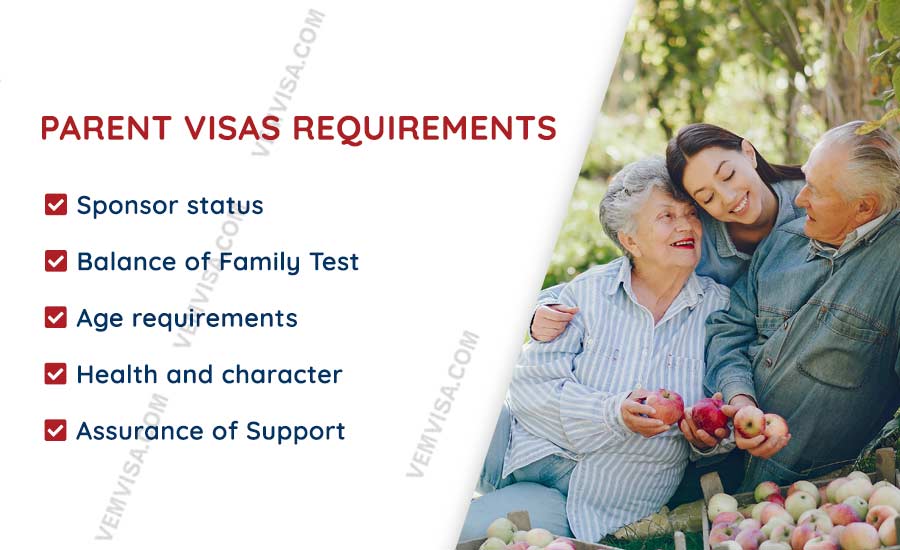
The exact requirements depend on the subclass. The following checks are common across the permanent Parent visa categories, while subclass 870 uses a different sponsorship framework.
Sponsor and family connection
The sponsor must meet the rules for the selected visa and provide evidence of the relationship to the parent.
For permanent categories, the sponsoring child is generally an Australian citizen, permanent resident or eligible New Zealand citizen who is settled and resident in Australia.
A sponsor is usually at least 18. Special arrangements can apply when the child is under 18.
For subclass 870, the approved Parent Sponsor must complete the sponsorship stage before the parent lodges the visa application.
Applicant eligibility
Pass the Balance of Family Test for subclasses 103, 143, 173, 804, 864 and 884.
Meet the age rule for an aged Parent visa. Age Pension age is currently 67.
Meet health, character, identity and public-interest requirements.
Meet the application-location and visa-condition rules for the selected subclass.
“Settled” is not the same as simply holding permanent residence. Home Affairs policy generally treats at least two years of lawful residence in Australia as a reasonable period, although the Department assesses the facts and limited exceptions may apply.
For permanent Parent categories, an Assurance of Support may be required before grant. It is a legal financial undertaking assessed by Services Australia. The assurer does not always have to be the visa sponsor, and a bank guarantee may also be required.
The AoS period can vary by visa. Permanent Contributory Parent categories generally have a longer support period than standard Parent categories. Review Services Australia’s current Assurance of Support guidance before making a budget.
A valid Parent visa strategy needs a correct subclass, eligible sponsor, family-test analysis and evidence that remains current during a long processing period.
How the Balance of Family Test works
The Balance of Family Test measures the parent’s family links to Australia. It applies to the six Parent, Contributory Parent and Aged Parent categories listed above. It does not apply to the Sponsored Parent visa 870.
A parent passes if at least half of their children and stepchildren are eligible children, or if the number of eligible children is greater than the number of children living in any other single country. Home Affairs states that the test cannot be waived, even in compelling or exceptional circumstances.
Pass example
Two children: one eligible child in Australia and one child overseas. At least half are eligible, so the test is passed.
Pass example
Five children: two eligible children in Australia and one child in each of three other countries. Australia has more children than any other single country.
Fail example
Three children: one eligible child in Australia and two children in the same overseas country. Australia has fewer than half and fewer than that country.
Children, stepchildren and adopted children can be counted under the Department’s definitions. Temporary visa holders in Australia are not automatically treated as eligible children. Use the official Balance of Family Test guidance for the current counting rules.
Parent Visa Australia cost in 2026
The visa application charge varies sharply by subclass. The figures below were checked against Home Affairs information updated on 1 July 2026 and refer to a single primary applicant. Charges can involve two instalments and may change without notice.
Visa subclass
Current published charge
Planning note
103 Parent
From AUD 8,665 over 2 instalments
Lower charge, but Home Affairs currently estimates a 33-year timeframe for new Parent/Aged Parent applications.
143 Contributory Parent
From AUD 49,900 over 2 instalments
Higher charge; a mandatory AoS and related bond may also apply.
173 Temporary Contributory Parent
From AUD 33,375 over 2 instalments
The later 143 stage has additional charges.
804 Aged Parent
From AUD 8,665 over 2 instalments
The parent must meet aged and onshore requirements.
864 Contributory Aged Parent
From AUD 49,900 over 2 instalments
Higher charge and permanent-stage AoS planning.
884 Temporary Contributory Aged Parent
From AUD 35,430 over 2 instalments
The later 864 stage has additional charges.
870 Sponsored Parent
AUD 6,370 for up to 3 years; AUD 12,440 for up to 5 years
Separate sponsorship, health insurance, medical and other costs can apply.
Budget beyond the visa application charge.
Allow for additional applicants, medical examinations, police certificates, translations, private health insurance, travel, the Assurance of Support bond and professional fees. Home Affairs’ pricing estimator may not include every second instalment or later-stage cost.
Permanent Parent visa applications are subject to capping and queueing. Home Affairs first assesses whether an application meets the core criteria for a queue date. It later releases queued applications for final processing when program places become available.
New contributory applications
About 15 years
Current Home Affairs planning estimate for Contributory Parent categories.
New Parent / Aged Parent applications
About 33 years
Current planning estimate for standard Parent and Aged Parent categories.
As at 31 May 2026, the Home Affairs headline queue summary said it had released Contributory Parent applications with queue dates up to November 2018, and Parent and Aged Parent applications with queue dates up to February 2014. The live page should be checked because queue dates and program outcomes change.
The Sponsored Parent visa 870 is excluded from the permanent Parent visa queue. Use the Department’s general processing-time guide for the 870 rather than the 15-year or 33-year estimates.
Home Affairs cannot provide an exact decision date for an individual Parent visa application. Monitor the official Parent visa queue release page rather than relying on an old blog table.
How to apply for a Parent Visa Australia
The application method now depends on the subclass. Home Affairs states that subclasses 103, 143, 804 and 864 are lodged online through ImmiAccount. Temporary Contributory Parent applications for subclasses 173 and 884 continue to use the paper process. The 870 requires an approved sponsorship before the parent submits the visa application.
Step
What to do
1. Choose
Compare temporary versus permanent, aged versus non-aged, direct versus two-stage, and realistic waiting periods.
2. Check sponsor
Confirm status, age, settled residence, relationship evidence and any income or sponsorship requirements.
3. Test eligibility
Complete the Balance of Family Test analysis, aged-parent check and visa-condition review before lodging.
4. Prepare evidence
Collect identity, relationship, family composition, sponsor status, civil records and translated documents.
5. Lodge correctly
Use ImmiAccount or the required paper form for the selected subclass. Pay the correct first instalment.
6. Maintain the case
Update passports, addresses, family changes and contact details during the queue. Respond to Department requests by the deadline.
7. Final stage
Complete health, character, second-instalment and Assurance of Support requirements when requested.
Check the parent’s current visa before an onshore aged application. A No Further Stay condition can prevent many onshore visa applications unless a waiver is available. A bridging visa is not a substitute for checking the current visa, travel rights, work rights and health-cover position. See VEM’s Bridging visa guide and the Department’s No Further Stay guidance.
Parent Visa Australia documents checklist
The document list changes by subclass and family history. Use this table as a planning checklist, then follow the current Home Affairs application form or ImmiAccount list.
Evidence group
Examples to organise
Purpose
Applicant identity
Passport, full birth certificate, national ID, photographs, name-change documents and previous passports.
Confirms identity, age and travel history.
Parent-child relationship
Birth, adoption, marriage, divorce and family-register records linking the parent and sponsor.
Proves the qualifying family relationship.
Family-test evidence
Details and status evidence for every child and stepchild, including residence and citizenship or permanent-residence evidence.
Supports the Balance of Family Test calculation.
Sponsor evidence
Australian passport, citizenship certificate, permanent visa evidence, address history, residence evidence and financial information.
Shows sponsor status, settled residence and ability to meet obligations.
Health and character
Health examinations when requested, police certificates, military records and character explanations where relevant.
Addresses health and character requirements.
AoS and financial planning
Assurer identity and income evidence, Services Australia assessment and bank-guarantee evidence when requested.
Completes the financial-support requirement before permanent grant.
Translations and certification
English translations, translator details and certified copies where the current process requires them.
Makes overseas records usable in the application.
Because permanent Parent visa applications can remain in the queue for many years, store complete copies of the application and maintain a simple update file for new passports, deaths, marriages, divorces, address changes and changes to a child’s immigration status.
Bridging visa, Medicare and long-term financial planning
Families often focus on the application fee and overlook the years between lodgement and decision. An eligible onshore aged Parent application may be associated with a bridging visa, but the bridging visa’s activation, work rights and travel rights depend on the actual grant and the parent’s existing visa position.
Do not assume the parent will automatically receive Medicare, social security or unrestricted travel during the waiting period. Private health insurance, living costs, travel restrictions and ongoing sponsor support can become the largest practical costs of the strategy.
A parent who needs a defined temporary stay may compare subclass 870 with visitor options, while a family seeking permanent residence should test whether the 15-year or 33-year planning horizon remains realistic. Alternative family visas, such as the Aged Dependent Relative visa 838, have separate dependency rules and should not be treated as substitutes without an eligibility assessment.
Build a Parent visa plan around time, cost and family evidence
A structured review can compare the seven pathways, test the Balance of Family rules, identify onshore visa-condition risks and map the total cost beyond the application charge. Learn more about VEM’s registered migration-agent services on the VEM Australian migration agency page.
There is no guaranteed “fastest” Parent visa. The temporary subclass 870 is outside the permanent Parent visa queue, while Contributory Parent categories currently have a shorter estimated wait than the 103 and 804 categories. Use live processing information before deciding.
How long does a Parent Visa Australia take?
As checked on 16 July 2026, Home Affairs estimates about 15 years for new Contributory Parent applications and about 33 years for new Parent and Aged Parent applications. Individual processing can differ.
How much does a Parent visa cost in Australia?
Published primary-applicant charges currently range from AUD 8,665 for subclasses 103 and 804 to AUD 49,900 for subclasses 143 and 864. The 870 currently costs AUD 6,370 for up to three years or AUD 12,440 for up to five years. Additional costs can apply.
Can I sponsor both parents?
Potentially, but each parent must meet the selected visa requirements. Charges, sponsorship capacity, family-test evidence, health criteria and Assurance of Support planning can increase when more than one applicant is involved.
Does subclass 870 require the Balance of Family Test?
No. Home Affairs states that the 870 does not require the Balance of Family Test or an Assurance of Support. It does require an approved Parent Sponsor and adequate Australian health insurance.
Can a Parent visa applicant receive a bridging visa?
A valid onshore aged Parent application may lead to a bridging visa, depending on the subclass and the parent’s current visa status. Do not assume that it provides work or travel rights. Check the actual bridging visa grant and any No Further Stay condition.
What is the difference between subclass 143 and 173?
The 143 is the permanent Contributory Parent visa. The 173 is a temporary visa valid for up to two years and is used as the first stage of a two-step pathway to the 143, with further charges and requirements at the permanent stage.
Is Age Pension age the same as eligibility for the Australian Age Pension?
No. Age Pension age is currently 67 and is used for the aged Parent visa age test. Receiving the Age Pension payment has separate residence, income and assets rules.
Yes, Australian citizens and permanent residents can sponsor their parents to live in Australia permanently through different Parent visa options (such as Subclass 103, 143, 804, and 864).
However, these visas have strict requirements, including the Balance of Family Test, sponsor income criteria, and formal sponsorship obligations.
Costs and waiting times vary. Non-contributory visas are cheaper but can take many years, while contributory visas cost more but are processed faster.
The balance-of-family test requires that at least half of your eligible children must be Australian citizens, Australian permanent residents, or eligible New Zealand citizens living in Australia, or that you have more eligible children living in Australia than in any other single country.
Yes, you can apply for a Visitor visa to visit Australia while your Parent visa application is being processed, and you may be eligible for a bridging visa during this time. Note that if you applied for your Parent visa offshore, you must be offshore when your visa is granted.
Mr. Phong Cao is a licensed migration agent by MARA (MARN: 1577877). He is also a member of the Migration Institute of Australia (MIA: 12648), one of the most reputable organizations in the field of immigration in Australia. In addition, Mr. Phong Cao holds a QEAC certification in study abroad consulting (QEAC: K580) and Australian real estate investment (RA85931). With over 12 years of experience in Australian immigration, he provides comprehensive solutions for studying and settling in Australia.
Chia sẻ bài viết
2 thoughts on “Australian Parent Visas: 7 Visa Types To Sponsor Parents”
Yvonne Keeler says:
Good day Our daughter who lives in Melbourne Australia and is Australian Citizen sent us this link . We have been visiting annually for between a month or two . What costs are involved with an application for a Parent RESIDENT VISA ? Please and an aporox time frame ? As we are 70 & 67 yrs … our son lives in New Zealand we feel we can’t defer a move down under for too long or we will be too old to enjoy a life with a children.

 VN
VN

 Người
đăng
Người
đăng Ngày
cập nhật:
Ngày
cập nhật: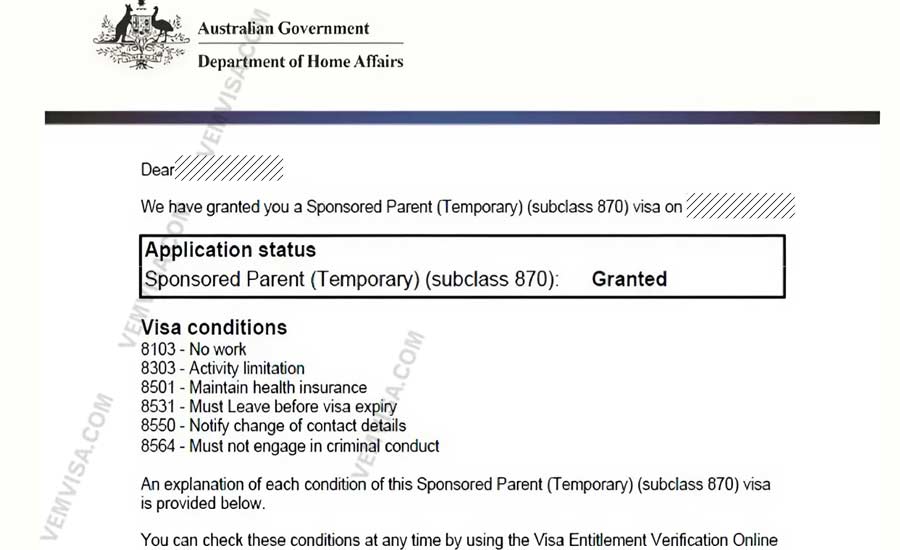





Good day Our daughter who lives in Melbourne Australia and is Australian Citizen sent us this link . We have been visiting annually for between a month or two . What costs are involved with an application for a Parent RESIDENT VISA ? Please and an aporox time frame ? As we are 70 & 67 yrs … our son lives in New Zealand we feel we can’t defer a move down under for too long or we will be too old to enjoy a life with a children.
We shall be visiting Melbourne from 2/12/23 therefore we will be in Australia to meet and applyb