A practical guide to selecting the right assessing authority, preparing evidence and using a skills assessment in a skilled-migration plan.
Checked 2 July 2026: the Australian Department of Home Affairs confirms that a skills assessment is an independent assessment by the relevant authority. For points-tested 189, 190 and 491 pathways, you need the assessment before submitting your Expression of Interest (EOI). Check the authority listed against your occupation before you start.
A skills assessment Australia is not a generic degree check. It is an occupation-specific assessment of whether your qualifications, experience and, where relevant, registration or technical evidence meet the standards set by the authority responsible for your nominated occupation.
This guide explains the Australian skills assessment process, how to identify the right assessing authority, what evidence is commonly needed, how to plan for skills assessment cost, processing time and validity, and how a positive outcome fits into 189, 190, 491 and selected employer-sponsored visa pathways. It is general information, not a substitute for the criteria published by your authority.
Points-tested visas
Assessment before EOI
Authority selection
Match the nominated occupation, not just the degree title
The strongest skills-assessment plan begins with the correct nominated occupation and authority.
What is a skills assessment in Australia?
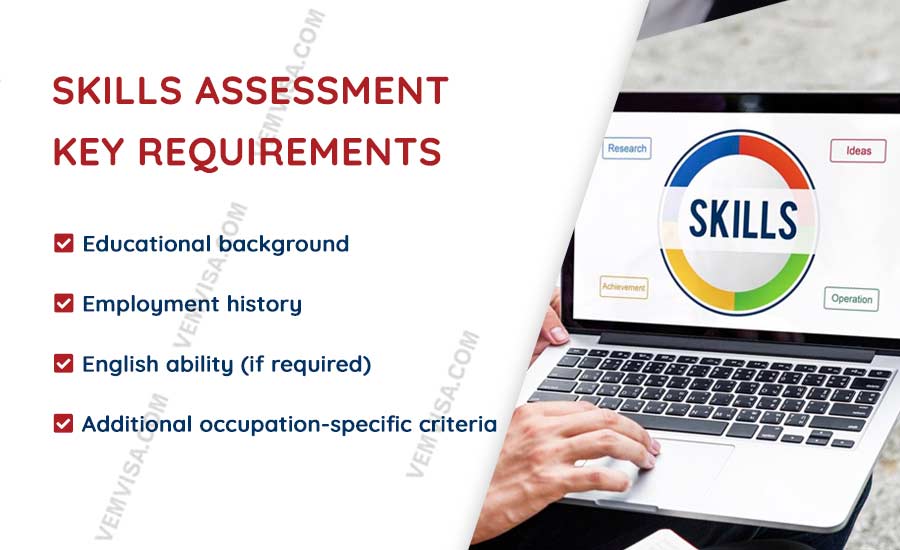
An Australian skills assessment is an assessment by the authority assigned to a particular occupation. The authority examines whether the applicant’s profile meets its standards for that occupation. Depending on the authority, this can involve qualifications, curriculum content, employment history, duties, English evidence, registration, practical evidence, technical interviews or a combination of these.
A positive outcome does not grant a visa, a state nomination or a job. It is one part of a migration pathway. You still need to meet the relevant visa criteria, including occupation-list settings, points, English, health, character, sponsorship or nomination requirements where they apply.
Do not choose an occupation by title alone. The nominated occupation should be supported by the actual duties, qualification pathway and evidence you can produce. A job title that sounds close but is not supported by the work record is not a strategic shortcut.
Who needs a skills assessment?
Whether an assessment is required depends on the visa pathway, stream, occupation and sometimes nationality. The following overview is deliberately practical rather than pretending every skilled visa has identical rules.
Pathway
General position
What to verify
189, 190 and 491
A suitable skills assessment is needed before you submit the EOI for the nominated occupation.
Correct occupation, authority, reference number, assessment date and continuing validity at invitation.
482 Skills in Demand
A skills assessment is required for some occupations, nationalities and stream settings, but not universally.
Current visa page, nominated occupation, country-specific rules and any named authority requirement.
494 regional employer-sponsored
The standard Employer Sponsored stream commonly requires a suitable skills assessment, subject to the applicable rules and exemptions.
Occupation, stream, skills-assessment rule, employer nomination and any occupational licensing requirement.
186 and other employer-sponsored routes
Requirement depends on the stream, occupation and visa rules in force when the application is made.
Current visa page, any skills-assessment condition and the employer’s nomination strategy.
For points-tested applications, the skill assessment supports the claims in your EOI. Home Affairs states that the assessment must be obtained before the EOI is submitted, and the application must later be supported by documents proving the claims made in SkillSelect. [Official EOI guidance]
How to find the right assessing authority
Home Affairs lists the assessing authority against each eligible skilled occupation. Start with the current skilled occupation list, confirm the exact occupation and ANZSCO code, then follow the authority’s own criteria and application route.
The authority assesses evidence, not just an occupation title on a CV.
Skills assessment documents checklist
Each authority has its own checklist. The categories below are a planning checklist only. Treat the authority’s current instructions as the final source for formatting, certification, translation and submission requirements.
Evidence area
What a strong file commonly includes
Identity
Current passport identity page and any name-change evidence where documents are not in the same name.
Qualifications
Award certificate, academic transcript, course information or other proof specifically requested by the authority.
Employment
Detailed reference letters plus independent proof such as payslips, tax records, bank statements, contracts, social-insurance records or employer records, as applicable.
Registration or licence
Current professional registration, licence, membership or evidence of eligibility when the occupation requires it.
English and translations
English evidence only where the authority asks for it, plus accurate translations of documents not accepted in English.
Self-employment
Business registration, tax returns, invoices, client contracts, payment evidence, bank records and project evidence where the authority accepts self-employed experience.
Home Affairs advises skilled-visa applicants to provide detailed employment proof. A work reference alone may not be enough to establish employment history in a visa application, so build a record that is consistent across reference letters, contracts, payslips, tax documents and bank evidence. [Official evidence guidance]
Australian skills assessment process: step by step
1. Confirm the intended visa pathway and occupation
Identify the visa route first, then check the current occupation list and authority shown for the occupation. Do not begin by purchasing an assessment merely because a friend used the same authority.
2. Compare your evidence with the authority criteria
Review qualifications, employment dates, duties, registration and authority-specific rules. Identify gaps before lodging.
3. Build an evidence map
For each claimed role, map dates, hours, duties and independent payment or tax evidence. Resolve conflicting dates and job titles before submission.
4. Lodge with the relevant authority
Use the authority’s portal, follow its document format, pay the authority’s fee and retain the receipt/reference number.
5. Respond carefully to requests for further information
A response should clarify the existing evidence, not invent a new employment narrative. Keep all explanations consistent.
6. Use the outcome in the next migration step
For 189, 190 and 491, enter the assessment details in SkillSelect before submitting the EOI. For employer-sponsored routes, follow the relevant visa instructions about whether an assessment is required.
Treat the assessment as an evidence project, not a form-filling exercise.
Skills assessment validity and invitation timing
Skills assessment validity is not one universal number. Where an assessment document states its own validity period, use that period. Home Affairs states that if no validity period is shown, the assessment is generally valid for three years from issue. An authority may also have its own rules about renewal or reassessment.
Do not rely on an assumed 60-day renewal window. For 189, 190 and 491, Home Affairs requires a suitable assessment at the time of invitation. The 60-day period relates to lodging the visa application after invitation. You can update an EOI before invitation, but not after receiving one.
Use a simple timeline: assessment outcome date → expiry date (if any) → anticipated EOI/invitation period → visa-lodgement window. Do this before claiming points or accepting an invitation. [Official skills-assessment validity guidance]
Validity should be managed before invitation, not discovered in the final week of the visa-lodgement window.
Skills assessment cost and processing time
There is no reliable single skills assessment cost Australia or universal processing time. Each authority sets its own fees, payment rules, evidence requirements and service standards. Some occupations also require additional stages, verification, technical assessments or professional registration.
Plan for direct authority costs
Assessment application charge, verification, specialist assessment stages, review requests and any authority-approved priority service.
Plan for supporting costs
Translations, certification, course documents, reference evidence, professional registration, English tests and document retrieval.
Plan for timing risk
Incomplete evidence, verification requests and multiple assessment stages can extend the authority’s published processing time.
Check the authority’s official website for its current fee schedule and processing information immediately before application. A third-party range is not a quote, and copying a price from an old forum post is how a budget becomes performance art.
Common skills assessment mistakes to avoid
Choosing an occupation because its title sounds close, without checking duties and authority criteria.
Using a reference letter that omits dates, hours, salary, duties or the referee’s contact details.
Claiming work experience that cannot be supported with independent payment, tax or employment records.
Assuming an English test is mandatory for every assessment or assuming one test score works for every authority and visa.
Confusing professional registration with a migration skills assessment.
Submitting a points-tested EOI without a suitable assessment already in place.
Waiting to discover expiry, translation or verification issues after receiving an invitation.
Relying on outdated fees, timeframes, occupation names or website screenshots.
For a first review, create one evidence file per role: employer name, employment dates, position, hours, duties, salary/payment proof, tax evidence and references. It makes discrepancies visible early, before they appear in multiple forms and become an expensive personality trait.
Plan the assessment before the visa application
Bring your target occupation, qualifications, role history, current visa pathway and available supporting documents to an evidence-planning discussion. This helps identify the authority rules and evidence gaps before an assessment application is lodged.
It is an outcome from the relevant assessing authority showing that your profile meets that authority’s requirements for the nominated occupation. It does not, on its own, grant a visa, job offer or state nomination.
Do I need a skills assessment for 189, 190 or 491?
For the points-tested pathways, you need a skills assessment in the occupation you nominate before you submit your EOI. The assessment needs to be suitable at the time you are invited to apply.
Does every skilled or employer-sponsored visa require a skills assessment?
No. The requirement depends on the visa, stream, occupation and sometimes nationality. Check the specific visa page and the occupation rule in force when you apply.
How long is an Australian skills assessment valid for?
Use the validity period stated by the authority. If no period is stated, Home Affairs generally treats the assessment as valid for three years from issue. Always check the visa and authority rules that apply to your case.
How much does a skills assessment cost in Australia?
It depends on the authority, occupation, assessment pathway and whether additional stages are required. Check the authority’s current fee page and include document, translation and verification costs in your plan.
Can self-employed or freelance work be used?
Potentially, where the authority accepts it and you can provide the required evidence. Business registration alone is rarely enough; the authority may require tax, invoices, contracts, payment evidence and proof of the work performed.
Can I submit an EOI first and get the skills assessment later?
Not for the nominated occupation in a points-tested 189, 190 or 491 EOI. Home Affairs says the skills assessment must be obtained before the EOI is submitted.
Mr. Phong Cao is a licensed migration agent by MARA (MARN: 1577877). He is also a member of the Migration Institute of Australia (MIA: 12648), one of the most reputable organizations in the field of immigration in Australia. In addition, Mr. Phong Cao holds a QEAC certification in study abroad consulting (QEAC: K580) and Australian real estate investment (RA85931). With over 12 years of experience in Australian immigration, he provides comprehensive solutions for studying and settling in Australia.

 VN
VN

 Người
đăng
Người
đăng Ngày
cập nhật:
Ngày
cập nhật: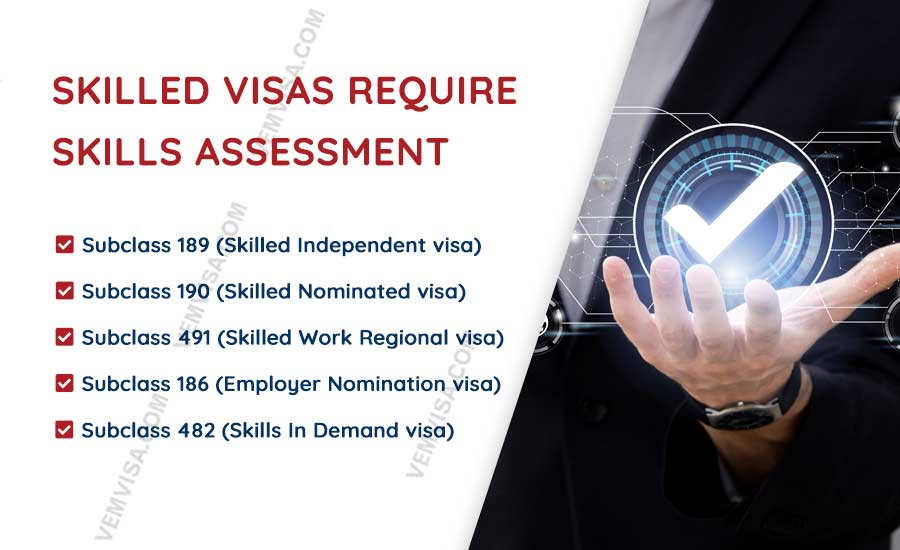





Could you kindly assess my profile and advise whether I am eligible to apply for Australian Permanent Residency (PR) or a sponsorship visa?
Thank you for contacting VEM. Our Customer Service team will contact you to assist you as soon as possible.