494 Visa Australia: Requirements, Cost, Salary & PR Pathway
VEM Visa | Australian Regional Employer Sponsorship
A current guide to the Skilled Employer Sponsored Regional visa (subclass 494), including applicant requirements, employer steps, salary settings and the 191 PR route.
Checked 2 July 2026: the standard Employer Sponsored stream currently shows a visa application charge from AUD 6,140. From 1 July 2026, the Temporary Skilled Migration Income Threshold (TSMIT) for 494 nominations increased to AUD 79,423. Both figures should be checked again immediately before lodgement.
The Skilled Employer Sponsored Regional (Provisional) visa (subclass 494) is a five-year regional employer-sponsored visa. It is for skilled workers with a genuine job offer from a qualifying employer in a designated regional area of Australia.
This guide addresses the central questions behind searches for visa 494 Australia, 494 visa requirements, 494 visa salary requirements, 494 visa cost, 494 visa processing time 2026, 494 DAMA visa requirements and 494 visa to PR. It is a general information page, not a substitute for advice on a particular employer, occupation or labour agreement.
Visa length
5 years
Core model
Employer sponsorship in a designated regional area
The 494 route starts with a genuine regional employer need, not an EOI points ranking.
What is a 494 visa in Australia?
The visa subclass 494 enables regional employers to sponsor skilled workers when they cannot source an appropriately skilled Australian worker. The visa allows the holder to live, work and study in designated regional Australia for up to five years.
Unlike the points-tested 189, 190 and 491 visas, the 494 visa is built around an employer nomination. The job, the sponsoring business, the regional location, the salary and the applicant’s occupation all need to fit the relevant stream rules.
Important distinction: a 494 visa is not a direct permanent residence visa. It can provide a pathway to the subclass 191 permanent residence visa after the holder has met the relevant time, regional residence/work and compliance requirements.
494 visa streams: Employer Sponsored, Labour Agreement and Subsequent Entrant
The correct stream matters because the evidence, sponsor pathway and potential concessions differ. An applicant cannot simply choose the stream with the friendliest-looking label, a shame for humanity’s administrative habits.
Stream
When it may fit
Core point to verify
Employer Sponsored
A qualifying regional employer has a genuine full-time role and nominates an eligible occupation.
Standard applicant rules, Regional Certifying Body assessment and salary settings.
Labour Agreement
The employer has an approved labour agreement with the Australian Government.
The particular agreement, occupation list and any stated concessions control the case.
Subsequent Entrant
An eligible member of the family unit applies to join an existing 494 primary holder.
Family-unit evidence, health/character and functional English or possible second instalment.
494 DAMA visa requirements: what “DAMA” actually means
A Designated Area Migration Agreement (DAMA) is not a separate visa subclass that an individual applies for directly. It is a labour-agreement framework between the Australian Government and a Designated Area Representative. An endorsed employer in that region may seek an individual labour agreement and, if approved, may use the 494 Labour Agreement stream for occupations and concessions covered by that agreement.
DAMA terms vary by region and agreement. A concession for age, English, salary, work experience or occupation must be expressly available under the relevant agreement. The worker needs an employer in the designated region, in an occupation listed under the head agreement; they cannot self-nominate into a DAMA. Read VEM’s DAMA visa overview.
494 visa Australia requirements
For the standard Employer Sponsored stream, both the applicant and employer must meet separate requirements. A suitable worker cannot repair an unsuitable nomination, and an impressive employer cannot repair unsupported personal claims.
Applicant checklist
Be nominated by an approved work sponsor for an eligible regional role.
Have a relevant occupation on the applicable skilled occupation list.
Have a suitable skills assessment unless an exemption applies.
Have at least 3 years of relevant work experience in the nominated occupation for the standard Employer Sponsored stream.
Be under 45 at application unless an exemption applies.
Meet Competent English, unless the relevant labour agreement or an exemption changes the standard position.
Meet health, character and any occupation-specific registration or licensing requirements.
Employer checklist
Operate in a designated regional area and be eligible to sponsor the worker.
Offer a genuine full-time skilled position in the employer’s business or associated entity.
Meet labour market testing obligations where required.
Meet salary, employment-condition and sponsorship obligations.
Have the nomination assessed by the relevant Regional Certifying Body for the Employer Sponsored stream.
Pay applicable government charges, including the Skilling Australians Fund levy.
For a standard 494 case, the positive skills assessment and relevant work experience must align with the nominated occupation. Keep employment evidence practical and verifiable: references alone may not establish duties, salary, hours and relevant dates.
For English, Competent English currently includes IELTS 6.0 in each of the four components, alongside equivalent scores in other approved tests. English-test rules were updated in August 2025, so match your test date and score to the current Department table. See skills assessment guidance and review skilled occupation list guidance.
Applicant evidence and employer nomination evidence must be consistent with each other.
494 visa salary requirements in 2026
For a standard 494 nomination lodged from 1 July 2026, the employer must satisfy both the Annual Market Salary Rate (AMSR) and the TSMIT of AUD 79,423. The threshold is not a suggested salary and it is not the worker’s visa fee. It is one part of the employer’s nomination obligations.
Do not count non-cash benefits toward the TSMIT: Home Affairs states that non-monetary benefits such as accommodation or a car do not count toward the threshold. They must be provided in addition to the relevant TSMIT where applicable.
The AMSR analysis asks whether the proposed salary is consistent with what an Australian worker would be paid for the same or equivalent role in the same location. For the standard Employer Sponsored stream, a Regional Certifying Body assesses the AMSR as part of the nomination pathway.
A labour agreement, including a DAMA arrangement, may have different negotiated terms. Never assume a concession exists merely because another employer or another DAMA region had one. Check the current agreement, occupation and nomination conditions before relying on it.
How to apply for a 494 visa Australia: step by step
1. Confirm the regional job and visa stream
Check the work location, occupation, employer arrangement and whether the case belongs in the standard Employer Sponsored or Labour Agreement stream.
2. Complete applicant eligibility checks
Confirm skills assessment, work experience, English, age, registration/licensing and family-member documents before the nomination progresses too far.
3. Complete employer and salary checks
The employer checks sponsorship status, labour market testing, the genuine role, the regional location, AMSR and the applicable income threshold.
4. Obtain the required regional or agreement steps
The Employer Sponsored stream uses Regional Certifying Body assessment. A DAMA/Labour Agreement case usually needs Designated Area Representative endorsement and an approved employer labour agreement first.
5. Lodge the nomination and visa application
The employer lodges the nomination. The worker lodges the visa application with evidence tailored to the exact stream and responds promptly to requests for further information.
6. Maintain evidence and meet post-grant conditions
Keep employment, address, tax and family records. They can matter for compliance and for a future 191 application.
Employer, role and applicant evidence should be prepared as one consistent nomination-and-visa case.
494 visa to PR: how the subclass 191 pathway works
The usual permanent residence pathway after a 494 visa is the Permanent Residence (Skilled Regional) visa (subclass 191). The eligible 494 holder must generally have held the regional provisional visa for at least three years and complied with its conditions.
Current Home Affairs guidance says there is no minimum income requirement for the 191 Regional Provisional stream. That means historic online claims that a 494 holder must reach a flat AUD 53,900 taxable-income figure should not be used as current 191 advice. The Department may still require evidence that the eligibility criteria, including regional residence and work requirements, have been met.
After grant: check your grant letter and VEVO, not a generic blog, for the visa conditions attached to your own record. Condition 8579 is commonly associated with living, studying and working only in designated regional areas. Changes to employment or location should be assessed before they occur, especially for an employer-sponsored visa.
494 visa fee and cost for employer
A realistic 494 budget separates the worker’s visa application charge from the employer’s sponsorship and nomination costs. Combining them into one vague “494 visa cost” number is tidy, but wrong.
Cost group
Current guide
What to verify
Visa application charge
From AUD 6,140 for the main applicant as checked 2 July 2026.
Current stream, lodgement date, additional applicants, concessions and payment surcharge.
Applicant-related expenses
Variable.
Health exams, police certificates, biometrics, translations, skills assessment, English test and potential second instalment for certain adult family members without functional English.
Employer-side costs
Variable, plus SAF levy.
Nomination charge, Regional Certifying Body assessment, advertising/labour market testing, legal or agent services and Skilling Australians Fund levy where applicable.
SAF levy for 494
AUD 3,000 one-off for a business with annual turnover below AUD 10m; AUD 5,000 one-off for annual turnover of AUD 10m or more.
Eligibility, turnover category, exemptions/refunds and any current rule change.
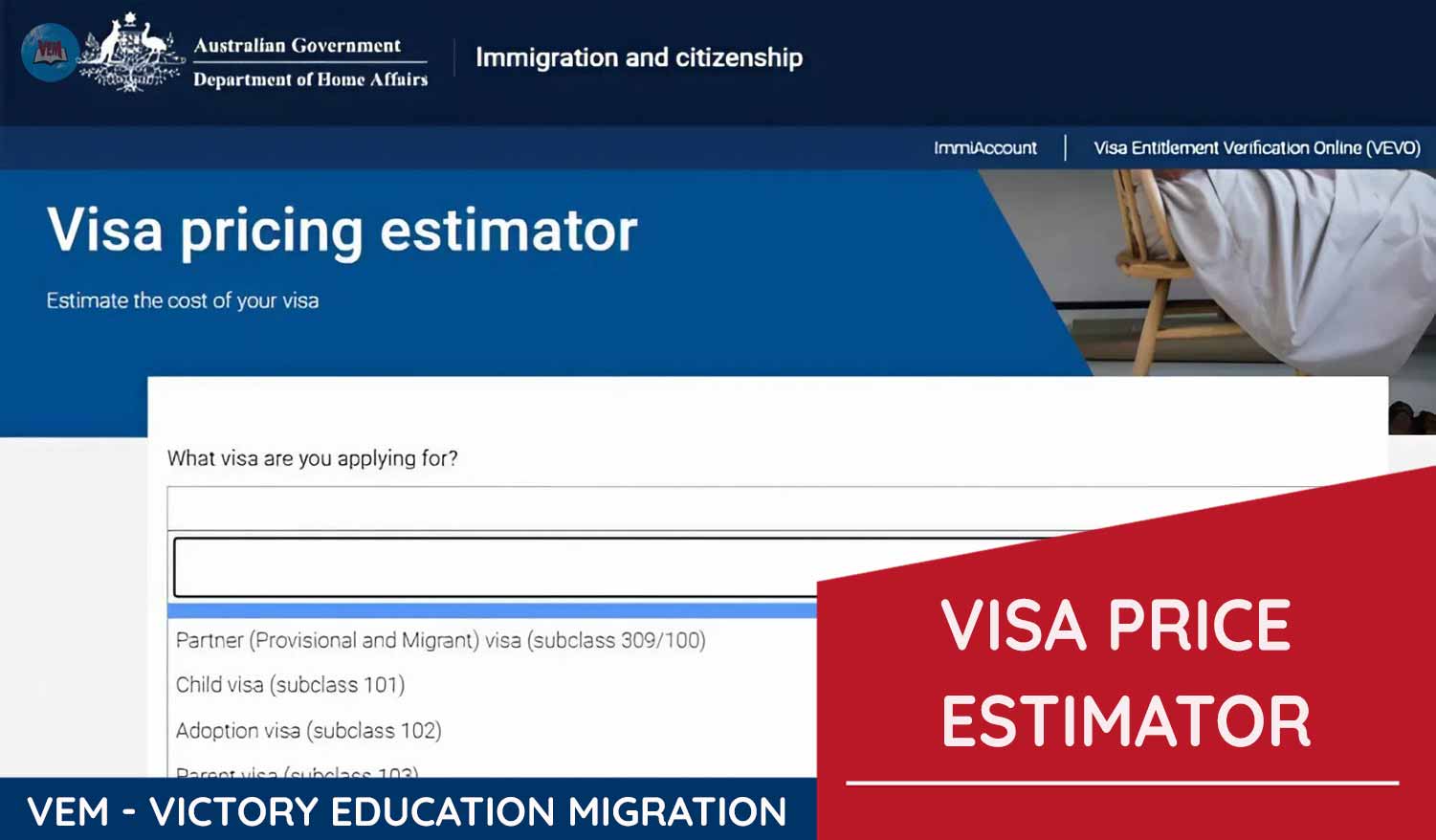
Use the official Visa Pricing Estimator close to lodgement. Home Affairs notes that the estimator does not necessarily calculate second instalments or other related costs, so it should be treated as a starting point rather than a complete household budget.
494 visa processing time in 2026
There is no responsible single answer to “how long does a 494 visa take?” without selecting the relevant stream and considering the nomination, Regional Certifying Body or labour-agreement steps. Home Affairs’ processing-time guide is based on recently decided applications and does not guarantee a decision time for an individual case.
For the best current estimate, use the Global Visa Processing Times guide, choose subclass 494, select the stream and enter the application date. Avoid relying on pages that repeat old “7–13 months” figures as if they were a guarantee.
494 visa pros and cons
Potential advantages
Does not rely on an EOI points ranking.
Provides a five-year regional pathway with an employer-backed role.
May create a route to 191 permanent residence after the relevant qualifying period and compliance.
DAMA/Labour Agreement options can broaden available occupations or settings where the exact agreement allows it.
Practical constraints
The role, salary and employer must remain genuinely compliant, not merely look plausible on a form.
Regional location conditions limit where the holder can live, work and study.
Changing employer, occupation or location can require careful immigration analysis before action.
Labour agreements and DAMAs are employer-led and region-specific, so they are not universally available alternatives.
Eligible family members may be included, subject to the relevant application and health, character and English requirements.
Assess the job, sponsor and pathway before lodging
A useful 494 assessment reviews the regional location, nominated occupation, work history, skills assessment, English, salary structure, employer evidence, labour market testing and the likely 191 plan. Each part needs to agree with the others.
For the standard Employer Sponsored stream, the main applicant is generally under 45 at the time of application unless an exemption applies. A Labour Agreement may contain different agreed concessions, so verify the specific agreement rather than relying on another region’s DAMA terms.
What English score is required for visa 494?
The standard Employer Sponsored stream requires Competent English. As checked in July 2026, that includes IELTS 6.0 in each of the four components or an approved equivalent. Labour Agreement terms can differ only where the agreement expressly allows it.
Is there a 494 visa salary requirement?
Yes. From 1 July 2026, the relevant TSMIT is AUD 79,423. The nomination must also satisfy the Annual Market Salary Rate. The detailed salary calculation belongs to the employer nomination, not to a one-line internet calculator.
Can a 494 visa lead to permanent residence?
It can lead to the subclass 191 pathway where the holder meets the time, regional and compliance requirements. It is not an automatic PR grant after three years.
What is the difference between visa 494 and visa 491?
The 494 visa is employer-sponsored and is not points-tested. The 491 visa is points-tested and requires state or territory nomination or eligible family sponsorship. Compare the 491 visa pathway.
Can my family join me on a 494 visa?
Eligible family members may be included in the application or may use the Subsequent Entrant stream where the requirements are met. Health, character and English-related second-instalment issues can affect the total cost and evidence plan.
Mr. Phong Cao is a licensed migration agent by MARA (MARN: 1577877). He is also a member of the Migration Institute of Australia (MIA: 12648), one of the most reputable organizations in the field of immigration in Australia. In addition, Mr. Phong Cao holds a QEAC certification in study abroad consulting (QEAC: K580) and Australian real estate investment (RA85931). With over 12 years of experience in Australian immigration, he provides comprehensive solutions for studying and settling in Australia.
Chia sẻ bài viết
2 thoughts on “494 Visa Australia: Requirements, Cost, Salary & PR Pathway”
cdsdude says:
1. How about education? When you are in 494, do you get domestic fee rates or international fee rates?
2. 491 is not mentioned under the “Visas You cant apply”, I think this should be included as well?
3. What happens if you get married after getting 494. Can you get your partner into Australia?
4. If you marry a Australian citizen/PR holder while being on 494, can you change the visa into a direct PR without fulfilling 3 years in 494 and then apply for 191?

 VN


 Người
đăng
 Ngày
cập nhật:





1. How about education? When you are in 494, do you get domestic fee rates or international fee rates?
2. 491 is not mentioned under the “Visas You cant apply”, I think this should be included as well?
3. What happens if you get married after getting 494. Can you get your partner into Australia?
4. If you marry a Australian citizen/PR holder while being on 494, can you change the visa into a direct PR without fulfilling 3 years in 494 and then apply for 191?
Thank you for contacting VEM. Our Customer Service team will contact you to assist you as soon as possible.