Updated Guide | Treatment and Medical Support
A practical guide for patients, organ donors, and support people applying for the Medical Treatment visa subclass 602.
The Medical Treatment visa Australia, or subclass 602, is a temporary visa for eligible people travelling to or remaining in Australia for medical treatment or consultation. It can also cover an organ donor and a person providing essential support to a patient or donor.
Current government fee from 1 July 2026: AUD 0 when applying outside Australia and AUD 480 when applying in Australia. Treatment, hospital, insurance, examination and living costs are separate.
A strong application connects the medical need, confirmed Australian provider, treatment dates, total costs, funding plan and intended period of stay. A visa grant does not make the Australian Government responsible for the bill. If the main purpose is tourism rather than treatment, compare VEM’s Visitor visa Australia guide.
What is a 602 Medical Treatment visa?
Subclass 602 is a short-term visa tailored to a documented medical purpose. Home Affairs decides the stay period and entry arrangements from the treatment plan and individual circumstances. It is not health insurance, a guarantee that a provider will accept the patient or a permanent migration pathway.
Temporary stay
The grant is usually aligned with confirmed treatment, recovery and reasonable travel arrangements.
Single or multiple entry
Travel permission depends on the grant; do not assume repeated entry is included.
No age limit
Applicants of any age can qualify, but children and vulnerable patients require appropriate care arrangements.
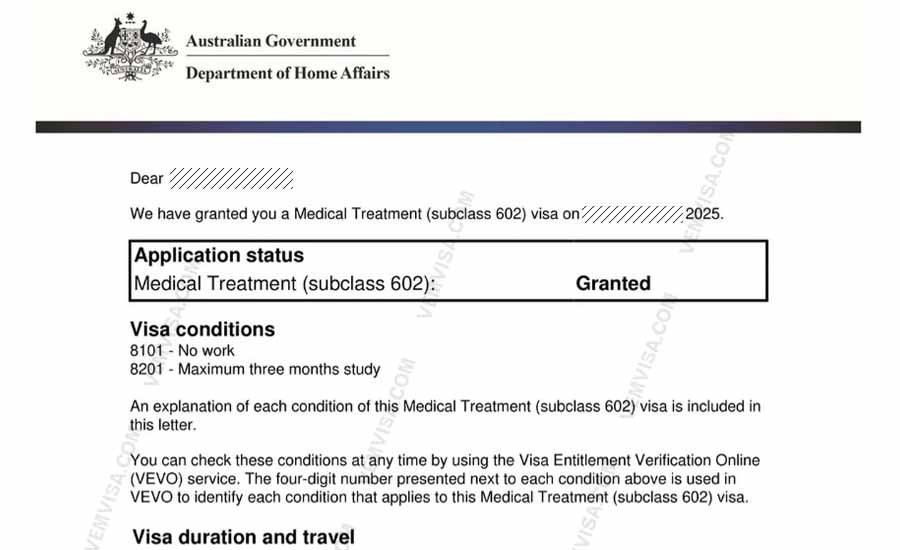
Offshore grants are often shorter, while an onshore applicant with a longer treatment plan may receive a longer period. Online statements such as “three months offshore” or “12 months onshore” are common patterns, not guaranteed maximums. The grant dates are determined case by case.
Who can apply for an Australia medical visa?
The visa for medical treatment covers several distinct applicant profiles. Each person should identify the correct reason and provide evidence directed to that role.
Patient
A person seeking confirmed medical treatment or consultation in Australia, including eligible surgery, specialist care, IVF or other recognised treatment.
Organ donor
A person travelling to donate an organ for transplantation in Australia after medical and funding arrangements have been concluded.
Support person
Someone needed to provide practical or emotional support to a patient or donor who holds or is applying for subclass 602.
Special circumstances
Eligible Western Province PNG arrangements and certain onshore applicants aged 50 or older who were refused permanent residence on health grounds and are unfit to depart.
Surrogacy is expressly excluded
Subclass 602 cannot be used to receive medical treatment for the purpose of surrogate motherhood. Applicants planning birth, fertility treatment or IVF should distinguish permitted personal treatment from an excluded surrogacy arrangement.

Medical Treatment visa 602 requirements
- Confirmed medical purpose: identify the consultation, procedure, donation or essential support role.
- Provider arrangements: obtain written acceptance from the Australian doctor, specialist or facility.
- Treatment schedule: provide expected admission, procedure, follow-up and recovery dates.
- Payment arrangements: show how all treatment, hospital and associated expenses will be paid without an unauthorised charge on Australian public funds.
- Living and support costs: fund accommodation, food, transport, insurance and accompanying people.
- Public-health safety: the applicant must not have a condition that threatens public health or endangers the community.
- Genuine temporary stay: intend to comply with the medical purpose and leave when the authorised period ends, unless a special exception applies.
- Character and debts: meet character requirements and address debts owed to the Australian Government or public health providers.
- Valid onshore application: check current visa conditions, including any No Further Stay restriction, before applying in Australia.

The treatment itself does not have to be unavailable in the home country, but the Australian plan must be genuine and sufficiently developed. A general wish to seek “better healthcare” without a provider, date, clinical plan and budget is usually incomplete.
Medical and hospital payment arrangements
Cost evidence is central because most temporary visitors do not have unrestricted access to Medicare. A hospital’s willingness to treat does not prove that the bill is covered. The application should reconcile every major cost with a funding source.
Provider quotation
Doctor, surgeon, anaesthetist, hospital, diagnostics, medicines, rehabilitation and follow-up costs.
Funding source
Savings, insurer approval, sponsor undertaking, foreign-government funding or prepaid hospital account.
Non-medical budget
Flights, accessible accommodation, transport, meals, carers and contingency funds for delays.
Where a government authority has approved public payment, provide the written approval. Otherwise, show the treatment will not become a charge on the Commonwealth, a state, a territory or an Australian public authority. If insurance is relied on, include the policy, limits, exclusions, waiting periods and written pre-authorisation for the planned treatment.
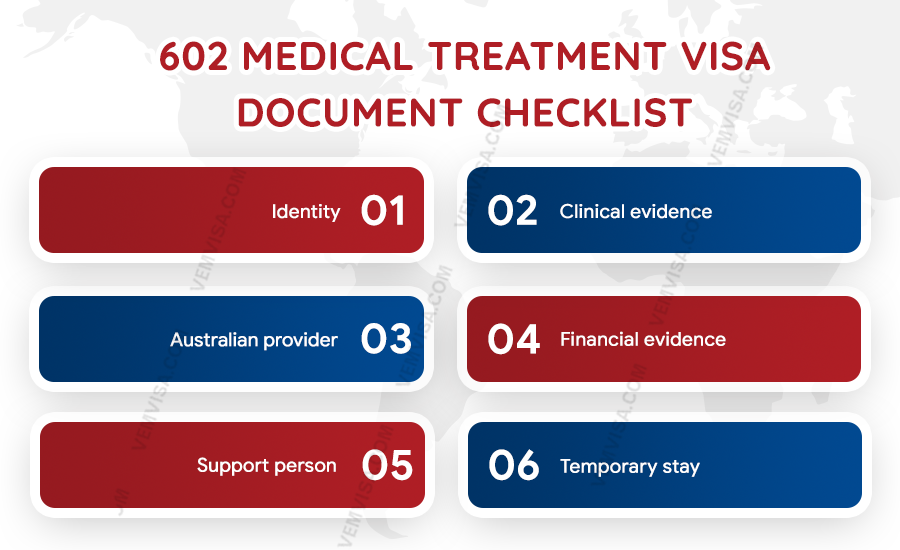
602 medical treatment visa document checklist
Identity
Passport, birth certificate, national ID, photographs and name-change evidence.
Clinical evidence
Medical history, diagnosis, referral, treating-doctor letter and explanation of the proposed care.
Australian provider
Acceptance letter stating treatment, dates, duration, facility and expected recovery or follow-up.
Financial evidence
Itemised quotes, deposits, bank statements, insurance approval or sponsor and government funding letters.
Support person
Relationship evidence, doctor’s explanation of why support is needed and linked patient or donor application details.
Temporary stay
Accommodation, travel plan, family and economic ties, intended departure and post-treatment care arrangements.
For an organ donor, include transplant-program confirmation, the recipient’s details, donor assessment and cost arrangements. For a support person, explain why the patient cannot reasonably proceed without that person; relationship alone may not show that support is necessary.
How to apply for a medical visa Australia
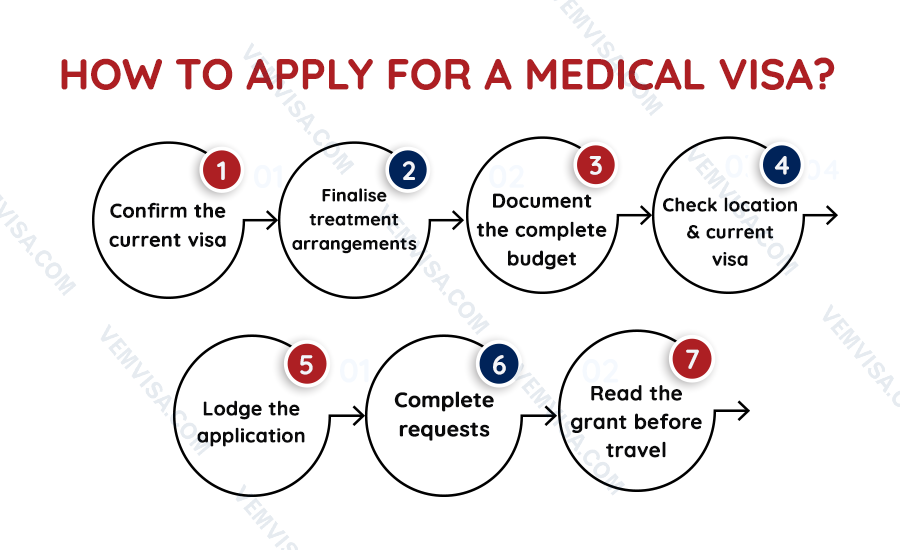
1. Confirm the correct applicant role
Identify whether the application is for treatment, organ donation, support, PNG arrangements or an unfit-to-depart situation.
2. Finalise treatment arrangements
Obtain written provider acceptance, treatment dates, expected length, cost estimate and clinical explanation before lodging.
3. Document the complete budget
Match medical and living expenses to savings, insurance, sponsor or approved government funding.
4. Check location and current visa
An offshore applicant must generally be outside Australia at grant; an onshore applicant must generally be in Australia. Check any No Further Stay condition or onshore application bar.
5. Lodge the application
Complete the current Home Affairs application process, upload clear supporting evidence and pay the onshore charge where applicable.
6. Complete requests promptly
Monitor messages for health examinations, biometrics, character documents, updated provider information or proof of payment.
7. Read the grant before travel
Confirm entry permission, last arrival date, stay period and conditions. Carry provider and funding documents when travelling.
Medical Treatment visa Australia cost
For applications lodged from 1 July 2026, Home Affairs lists these government charges:
Apply outside Australia
AUD 0
No government Visa Application Charge for the standard offshore application.
Apply in Australia
AUD 480
Current base application charge for an onshore subclass 602 application.
A person representing a foreign government may qualify for a nil charge. Limited nationality-based concessions can also apply under current pricing rules. Verify the exact amount in the Visa Pricing Estimator before submission.
Budget beyond the visa fee
- Specialist, surgeon, hospital, imaging, pathology and pharmaceutical charges.
- Insurance premiums, exclusions, excesses and uninsured treatment gaps.
- Visa health examinations, biometrics, police certificates and translations.
- Flights, accessible accommodation, local transport, meals and support-person expenses.
- Contingency funds if treatment, recovery or departure is delayed.
Medical Treatment visa 602 processing time
Home Affairs directs applicants to its live processing-time guide because recent decision data changes. At the time this article was reviewed, published industry summaries of Department data reported approximately 8 days for 50% of applications and 3 months for 90%. Treat these figures as historical indicators, not guaranteed service standards.
Medical urgency
A documented, time-critical treatment date can be raised with Home Affairs but does not guarantee priority or grant.
Complete arrangements
Unclear provider, funding or support evidence can result in further-information requests.
External checks
Health, character, identity, biometrics and document verification can lengthen assessment.
Do not schedule irreversible treatment or travel solely from an online processing estimate. If urgency is genuine, attach a doctor or hospital letter stating the clinical consequence of delay and the fixed treatment window. See VEM’s Australian visa processing-times guide.
Work, study and other subclass 602 conditions
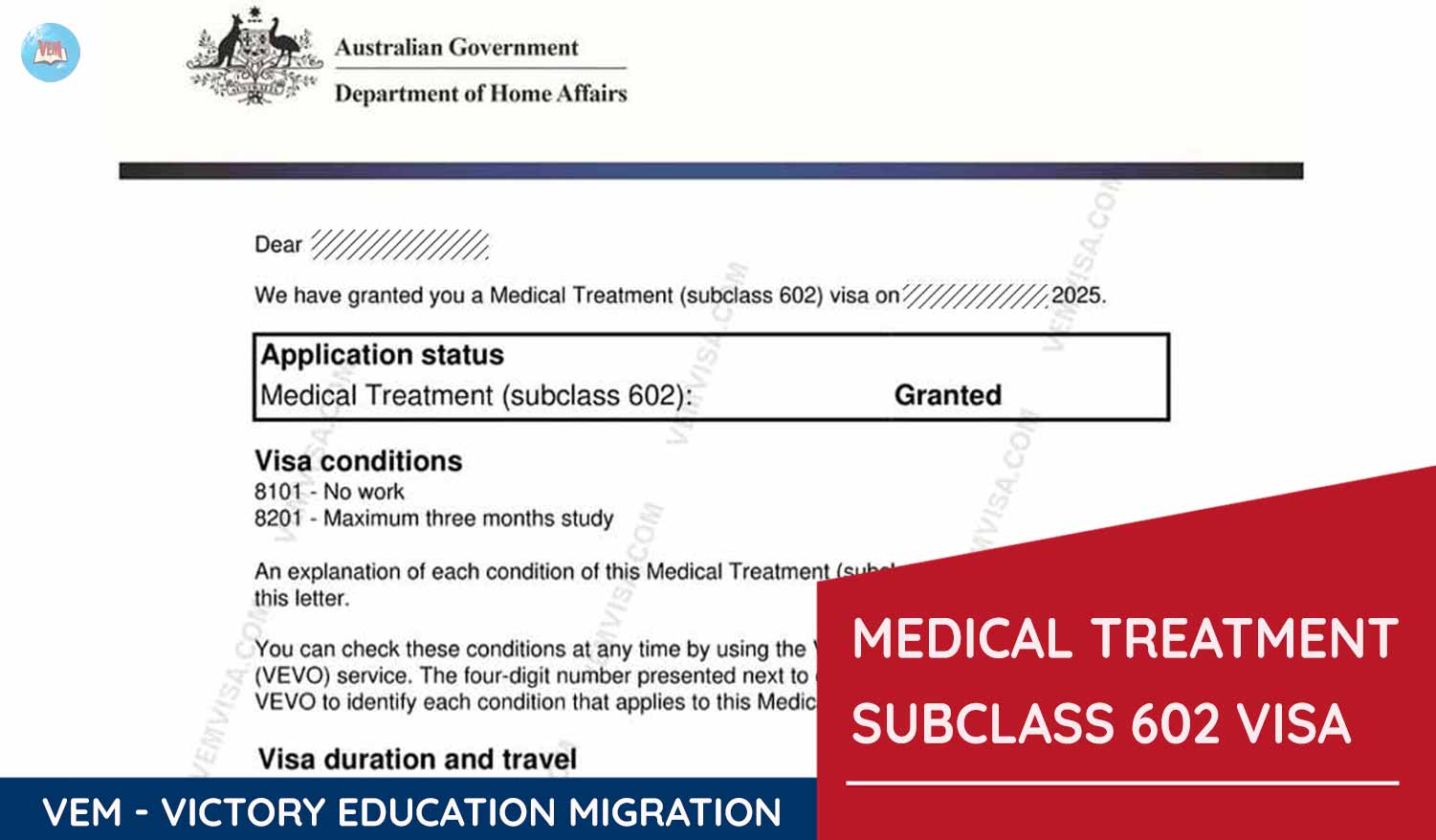
No work
Condition 8101 generally prohibits work. Do not assume a support person or organ donor has unrestricted employment rights.
Limited study
Study is generally limited to three months unless the individual grant or an applicable exception provides otherwise.
Maintain arrangements
Continue meeting treatment, funding, insurance and support commitments for the authorised stay.
Check the grant letter and VEVO before undertaking any activity. A 602 visa does not “extend” itself if the treatment changes. If more time is required, assess and lodge a new visa application before the current stay ends; a further grant is not automatic. VEM’s VEVO guide explains how to verify the in-effect visa and conditions.
Common mistakes in a medical visa application
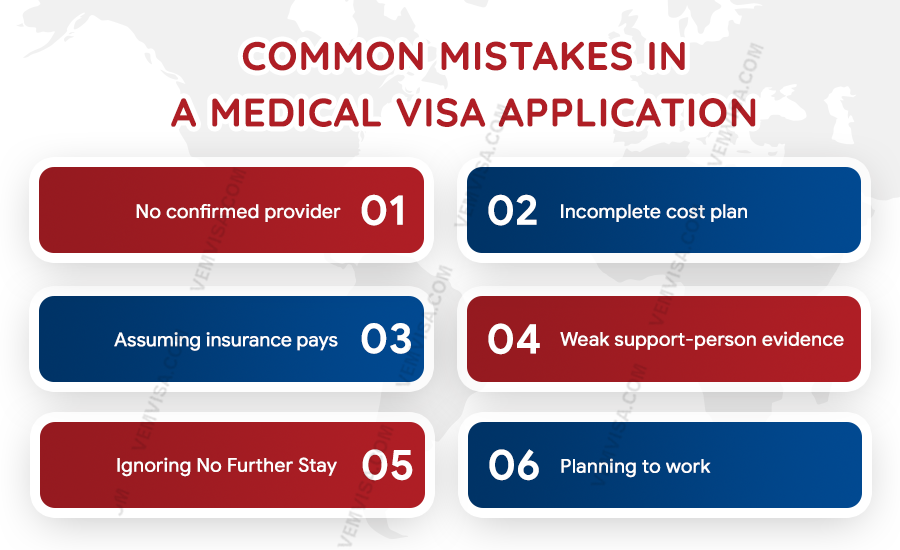
- No confirmed provider: relying on general internet research instead of a written Australian acceptance letter.
- Incomplete cost plan: showing the procedure fee but omitting hospital, recovery, medicines or support-person expenses.
- Assuming insurance pays: providing a policy without written confirmation that the planned treatment is covered.
- Weak support-person evidence: proving a relationship but not explaining why the person is medically or practically necessary.
- Using outdated fees: quoting AUD 315 or AUD 320 for an onshore application instead of the current AUD 480 charge.
- Ignoring No Further Stay: lodging onshore without checking whether a restrictive condition must first be waived.
- Planning to work: expecting employment income to fund the treatment despite condition 8101.
- Missing updated dates: failing to upload a new hospital letter when treatment is rescheduled.
Preparing a time-sensitive medical application?
Bring the provider letter, treatment schedule, complete quotation, and funding evidence for a case-specific review.
Contact VEM Visa
FAQs
Who can apply for a 602 Medical Treatment visa?
Eligible patients, organ donors and necessary support people can apply. Special pathways also exist for certain Western Province PNG arrangements and some onshore applicants who are medically unfit to depart.
How much does a medical visa Australia cost?
From 1 July 2026, the government fee is AUD 0 for an offshore application and AUD 480 for an onshore application. Medical care, insurance, examinations and living costs are additional.
How long can I stay on subclass 602?
Home Affairs sets the period from the treatment and recovery plan. Offshore grants are often shorter and many onshore grants remain under 12 months, but the individual grant dates control.
Can I work on a Medical Treatment visa?
Generally no. Condition 8101 prohibits work. Every patient, donor and support person should check their own grant and VEVO before undertaking employment or work-like activity.
Does Medicare pay for treatment under visa 602?
Do not assume so. Applicants generally need private payment, insurance, sponsorship or approved government funding. Confirm any Medicare or reciprocal-health eligibility separately before relying on it.
How long does a Medical Treatment visa take?
Processing changes over time. At review, industry summaries of Department data indicated about 8 days for 50% and 3 months for 90% of applications. Use the live Home Affairs guide and do not treat these figures as a guarantee.

 VN
VN
 Người
đăng
Người
đăng Ngày
cập nhật:
Ngày
cập nhật:



