A practical guide to AFP National Police Certificates, visa character evidence, identity documents, processing times and common mistakes.
An Australian Federal Police check for visa applications can be an important character document when the Department of Home Affairs asks for Australian criminal-record evidence. This guide explains when you may need an AFP police check for visa purposes, how to apply, what documents to prepare, how long it may take, and common mistakes to avoid.
Start with the request letter: If Home Affairs asks for an AFP National Police Certificate, use the AFP process and the correct purpose. Do not substitute a state police check unless the Department specifically asks for one.
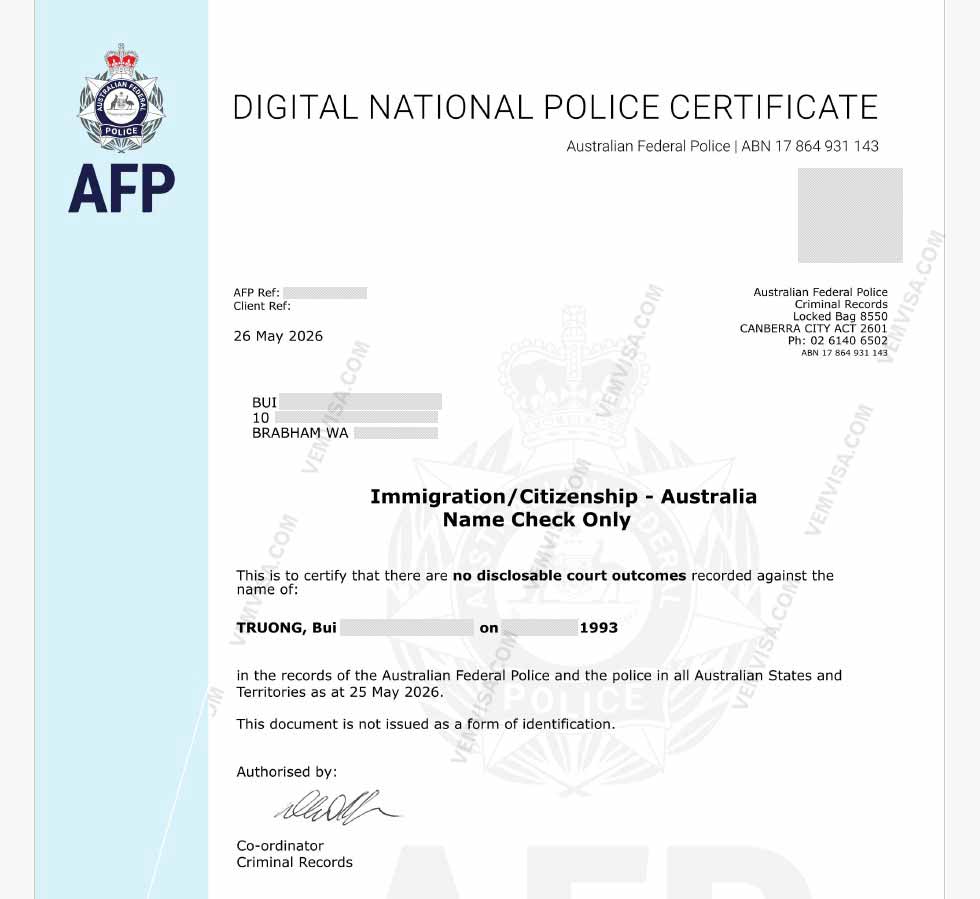
The Australian Federal Police calls this document a National Police Certificate, or NPC. It is a summary of your offender history in Australia and is sometimes called a national police check.
Category
Details
Cost
AFP National Police Certificate application fee: AUD 56
If fingerprints are required: AUD 113 total
Identity requirements
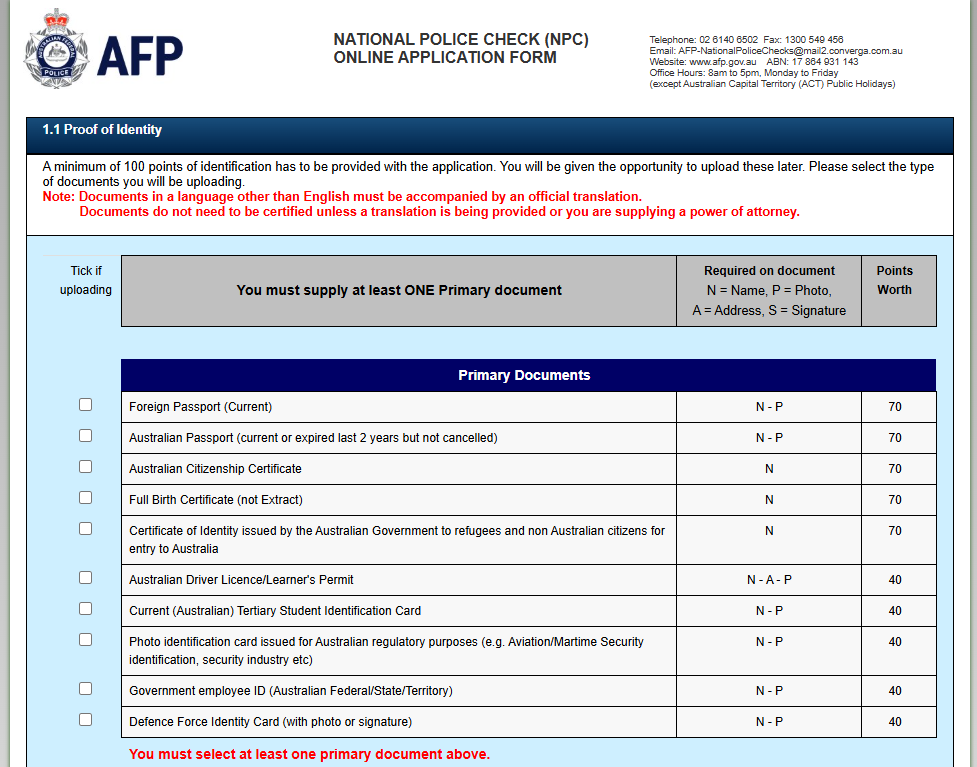
Complete a 100-point ID check
Provide identity documents that meet the minimum 100-point requirement.
Processing time
Most AFP National Police Certificates are completed and posted within 48 hours.
Name and fingerprint checks may take around 15–30 business days.
What is an Australian Federal Police check visa?
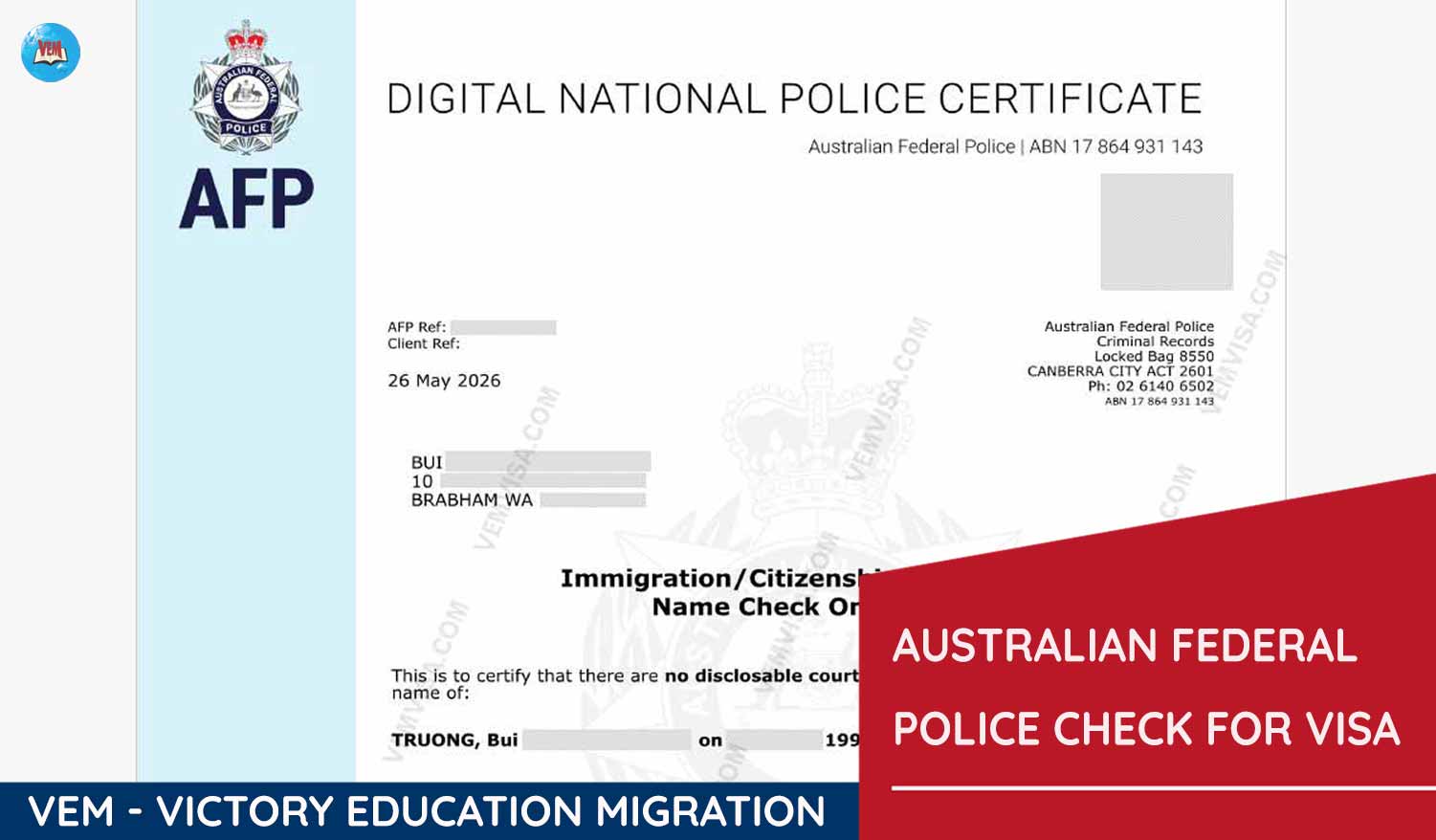
An Australian federal police check visa document usually refers to an AFP National Police Certificate submitted for Australian immigration or character purposes.
The AFP National Police Certificate summarises disclosable offender history in Australia. The AFP checks your details against national police information and releases information according to Australian laws and policies. The result may include local and interstate criminal and traffic court outcomes, outstanding warrants and pending charges where they are disclosable.
An AFP National Police Certificate may be requested as part of character evidence for a visa application.
When do you need an Australian police check?
You may need a police check for Australian visa purposes when Home Affairs assesses whether you meet the character requirements. The Department can ask for a police certificate after you apply, together with other character forms or supporting documents.
Common situations include permanent residence applications, partner visa applications, employer-sponsored visa applications, skilled migration cases and other visa applications.
Visa types where police checks matter
Character evidence can matter across many visa subclasses. The exact police-certificate requirement depends on the visa type, your residence history and the Department’s assessment.
Permanent residence and employer-sponsored pathways commonly require character evidence, such as subclass 186, 189 visa, 190 visa, and 491-related transitions.
Skilled visa applicants must meet character requirements before grant.
Temporary visas
Police certificates may still be requested depending on personal history and subclass.
AFP check vs state police check: what to choose?
For visa matters, do not choose a police check based only on price or speed. Choose the certificate that matches the Department’s request. If the request says AFP, use the AFP. If the request says a police certificate from another country, follow that country’s process.
Document
Issued by
Used for
AFP National Police Certificate
Australian Federal Police
Australian national police evidence, including immigration-related purposes where AFP is requested.
State or territory police check
State or territory police agency
Local employment, licensing or other local purposes.
Overseas police certificate
Authority in the relevant overseas country
Criminal-record evidence for time spent outside Australia.
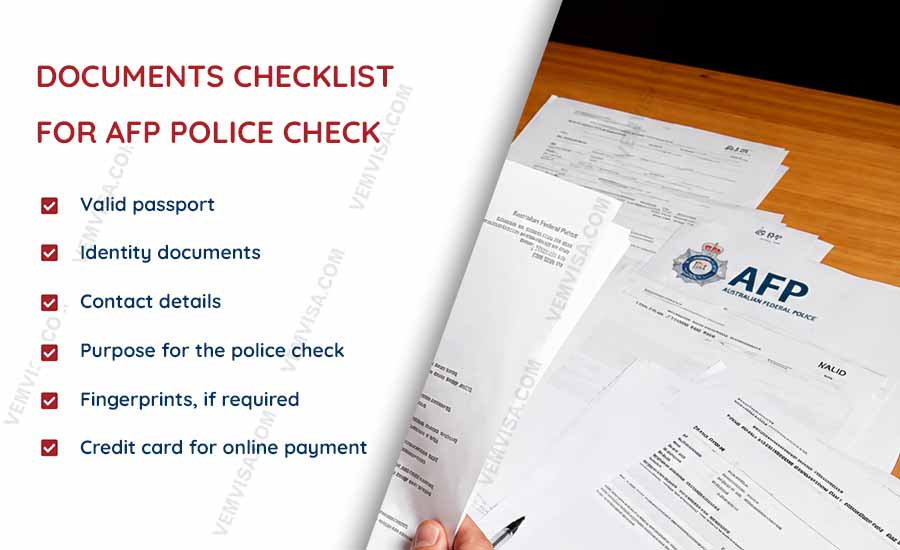
Documents checklist for AFP police check
Before applying for an AFP National Police Certificate, prepare your identity documents and make sure your personal details are consistent with your passport and visa records.
Identity and personal details
Valid passport or other primary identity document
Additional identity documents to reach at least 100 points
Correct date of birth and place of birth
Application details
Current residential address and contact details
All names you are known by, including previous names
Correct purpose for the police check
Payment and special items
Credit card for online payment, if applying online
Fingerprints, if specifically required
Prepare identity documents before starting the AFP police check application.
Name consistency matters: If your passport, visa application and AFP form show different name formats, provide clear evidence such as marriage certificates, change-of-name documents or other identity documents.
How to apply for an AFP police check
Step 1. Read the Home Affairs request
Confirm whether the Department asks for an AFP National Police Certificate, an overseas police certificate, Form 80 or another character document.
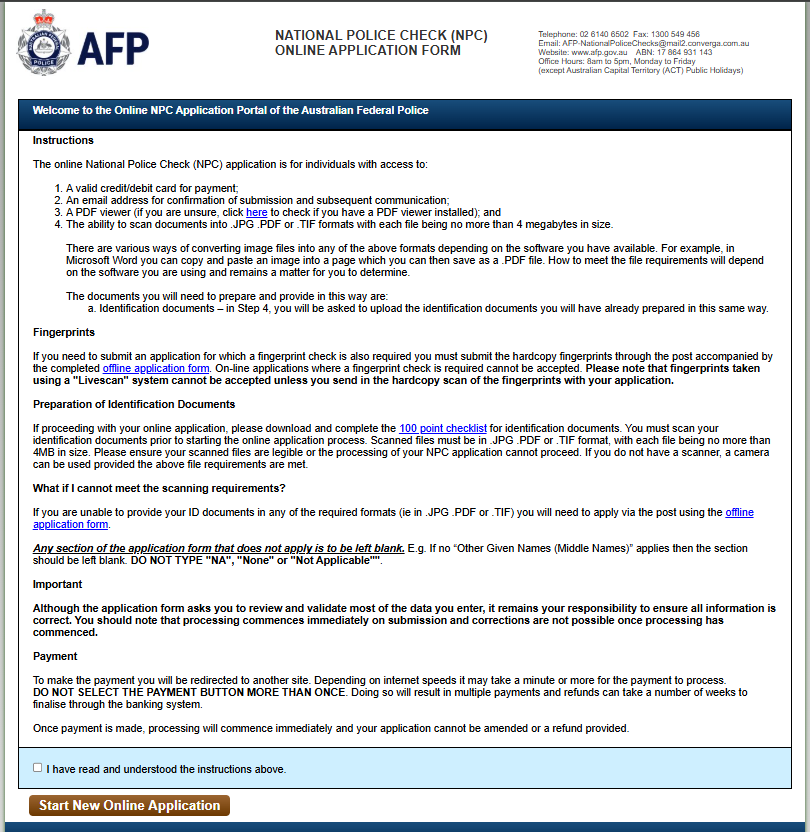
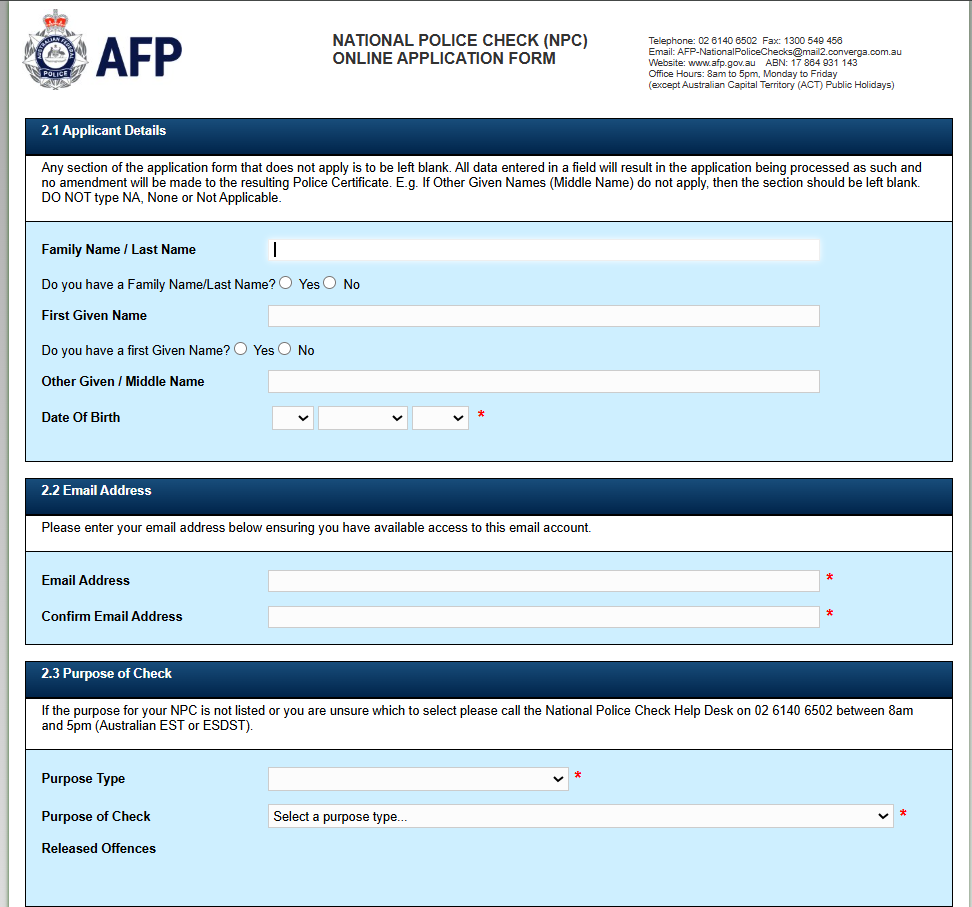
Refer to the Online NPC Application Portal of the Australian Federal Police to start a new online application. When completing the AFP National Police Check application, select Purpose Type: Commonwealth Employment/Purpose and Purpose of Check: Code 33 – Immigration/Citizenship.
Step 2. Prepare 100 points of identity documents
You must provide identity documents with a combined value of at least 100 points. Scan clear colour copies where possible. Make sure names, dates and document numbers are readable.
Step 3. Complete the online application
You can apply online when fingerprints are not required. Select the appropriate purpose type and purpose code, enter personal information, provide current and previous names, upload identity documents, review the declaration and pay the application fee by credit or debit card.
Step 4. Determine whether fingerprints are required
Fingerprints are generally not required for an AFP Police Check submitted for Australian immigration or citizenship purposes under Code 33. However, fingerprints may be required for certain overseas visas, security licences or other specialised purposes. Applications involving fingerprints cannot be submitted online and must be lodged by post.
Step 5. Receive your AFP police certificate
For online applications, the AFP normally sends the completed digital certificate as a secure PDF to the applicant’s email address. Applicants may also request a printed certificate to be delivered by post. Check your inbox and junk-mail folder for correspondence from the AFP.
Step 1: match the AFP application purpose to the Home Affairs request.Step 2: prepare identity evidence that satisfies the 100-point requirement.Step 3: complete the online application carefully before payment.
Processing time and fees
The processing time for a federal police check for visa purposes depends on the type of check, application completeness, identity documents and whether information must be checked across multiple states or territories.
Check type
AFP reference time
Fee
Notes
Name-based AFP National Police Certificate
Most are completed and posted within 48 hours
AUD 56
Allow extra time for email delivery, postal delivery or manual checking.
Name and fingerprint AFP National Police Certificate
15 to 30 business days
AUD 113
Online application is not available when fingerprints are required.
Hard-copy certificate
Processing time plus postage
Depends on AFP option
Check whether Home Affairs accepts digital evidence or requests a specific format.
Do not leave the Australia police check for visa steps until the final week before a deadline. Even a fast police check can be delayed by identity problems, manual review or postal timing.
Processing times and fees depend on whether a name-based or fingerprint-based check is required.
How long is an AFP police check valid for visa purposes?
The AFP states that the certificate is valid from the date of application, but it does not record court outcomes that happen after that date. The organisation requesting the certificate decides how long it will accept it.
For visa purposes, follow the current Home Affairs instruction or the specific request in your ImmiAccount. If your police certificate becomes too old before a decision, the Department may request an updated certificate.
Practical tip: If the visa processing period is long, keep your character evidence organised and monitor whether a new police certificate is requested before decision.
Common mistakes with AFP police checks
Before submitting your application, check for these common mistakes that could affect your AFP Police Check.
Using the wrong issuing authority
If Home Affairs asks for an AFP certificate, a state police check may not satisfy the request.
Selecting the wrong purpose
The AFP purpose can affect what information is released, so choose the purpose that matches the visa request.
Name mismatch
Different name formats across passport, ImmiAccount and police certificate can trigger questions or delays.
Uploading unclear scans
Low-quality uploads, missing pages or cropped certificates can lead to a request for further information.
Not declaring criminal history
Always answer character questions truthfully. Non-disclosure can be more damaging than the underlying issue.
Applying too late
Even standard checks can be delayed. Apply early enough to meet the Department’s deadline.
Final thoughts
Police certificates look simple until the Department requests the exact document, purpose, country, date range, and character explanation. VEM can review your Home Affairs request, help you identify the correct certificate and prepare a cleaner visa response.
Need help with an AFP police check for visa evidence?
VEM can help you review the Home Affairs request, choose the correct police certificate, prepare identity documents and respond to character evidence requests properly.
Mr. Phong Cao is a licensed migration agent by MARA (MARN: 1577877). He is also a member of the Migration Institute of Australia (MIA: 12648), one of the most reputable organizations in the field of immigration in Australia. In addition, Mr. Phong Cao holds a QEAC certification in study abroad consulting (QEAC: K580) and Australian real estate investment (RA85931). With over 12 years of experience in Australian immigration, he provides comprehensive solutions for studying and settling in Australia.

 VN
VN
 Người
đăng
Người
đăng Ngày
cập nhật:
Ngày
cập nhật: