Updated 2026–27 employer-sponsored visa guide
A practical comparison of subclass 482, 186 and 494 requirements, government fees, salary thresholds, regional sponsorship and permanent residence pathways.
The right employer sponsored visa Australia pathway depends on the occupation, work location, salary, experience, age and whether the worker wants permanent residence immediately or later. Both the employer and the applicant must satisfy separate requirements; a job offer alone does not guarantee approval.
This guide compares employer sponsored visas, explains current government fees and salary thresholds, and outlines sponsorship obligations, regional options, Designated Area Migration Agreements, and pathways to permanent residence.
Quick answer: the subclass 482 Skills in Demand visa starts at AUD 4,015, while the permanent subclass 186 and regional subclass 494 each start at AUD 6,140. Standard 2026–27 income thresholds start at AUD 79,423; the Specialist Skills threshold is AUD 146,576.
Subclass 482
AUD 4,015
Temporary Skills in Demand visa.
Subclass 186
AUD 6,140
Permanent employer-sponsored visa.
Subclass 494
AUD 6,140
Five-year regional sponsored visa.
What is employer sponsored visa?
An Australian work visa employer sponsored pathway connects an overseas worker with a business that needs to fill a genuine position. Depending on the subclass, the business obtains sponsorship approval or operates under a labour agreement, nominates an occupation and demonstrates that the proposed employment meets migration and workplace requirements.
The worker then applies for the relevant visa and provides evidence of identity, skills, experience, English ability, health and character. Some visas provide temporary or provisional residence first; others grant permanent residence immediately.
Terminology update: the Skills in Demand visa replaced the Temporary Skill Shortage visa on 7 December 2024. Both use subclass 482, but new applicants should assess current Skills in Demand rules rather than relying on older TSS occupation lists, salary figures or outdated three-year transition advice.
Main employer-sponsored visas
| Feature |
Subclass 482 |
Subclass 186 |
Subclass 494 |
| Visa type |
Temporary Skills in Demand |
Permanent Employer Nomination Scheme |
Provisional regional employer-sponsored |
| Stay |
Generally up to 4 years; some passport holders up to 5 |
Permanent from grant |
Up to 5 years |
| Work location |
Australia-wide |
Australia-wide |
Designated regional Australia |
| Typical experience |
At least 1 relevant year |
Direct Entry: usually 3 years; TRT: generally 2 years of eligible sponsored employment |
Usually 3 relevant years, unless exempt |
| Age |
No general visa age cap |
Generally under 45, unless an exemption applies |
Generally under 45, unless an exemption applies |
| Main applicant fee |
AUD 4,015 |
AUD 6,140 |
AUD 6,140 |
| PR pathway |
Potential subclass 186 transition |
Already permanent |
Potential subclass 191 after meeting regional requirements |
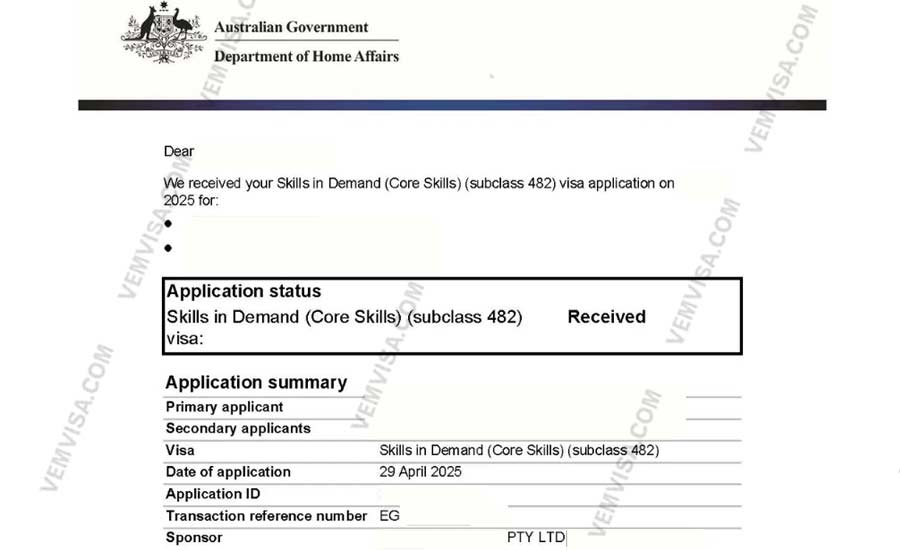
482 Skills in Demand visa
The subclass 482 is often the first Australia employer sponsored visa considered when a business needs a skilled employee and the worker is not yet eligible for permanent residence. The main pathways are the Core Skills stream, the Specialist Skills stream and the Labour Agreement stream.
Core Skills stream
This stream generally requires an occupation on the Core Skills Occupation List, an approved sponsor, an eligible nomination, at least one year of relevant experience and a salary that meets both the annual market salary rate and the Core Skills Income Threshold.
Specialist Skills stream
The Specialist Skills stream is for qualifying high-earning workers. It uses a higher income threshold and occupation eligibility rules that differ from the Core Skills stream. Certain occupation groups are excluded, so a higher salary alone does not establish eligibility.
Labour Agreement stream
This stream is available where the employer has an appropriate labour agreement with the Australian Government, including a qualifying industry agreement or DAMA arrangement. Requirements and concessions depend on the agreement itself.
186 Employer Nomination Scheme visa
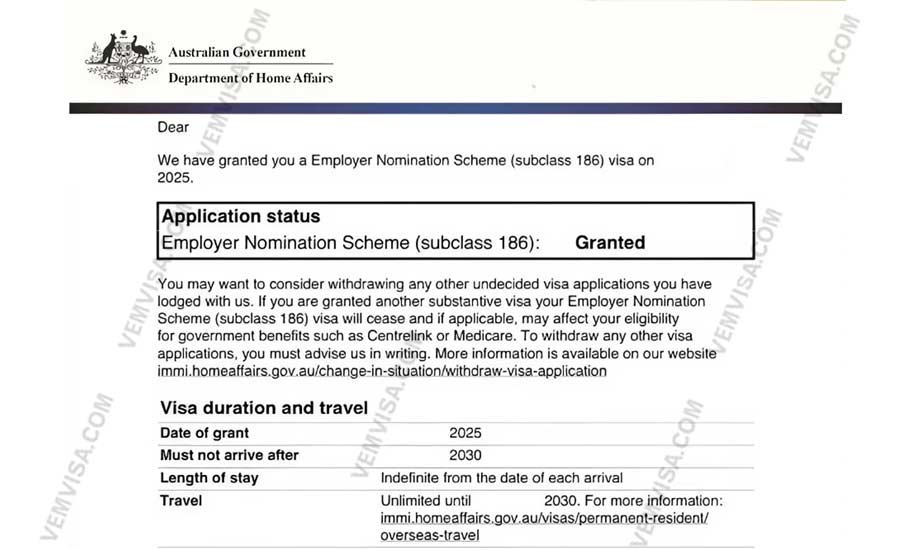
The subclass 186 is a permanent employer sponsored Australian visa. Its main streams are Direct Entry, Temporary Residence Transition and Labour Agreement.
- Direct Entry: generally requires an eligible occupation, at least three years of relevant experience, a positive skills assessment where required, competent English, and an age below 45 unless an exemption applies.
- Temporary Residence Transition: generally requires at least two years of eligible sponsored full-time employment, an approved employer nomination, and compliance with the relevant age and English requirements or exemptions.
- Labour Agreement: applies when permanent nomination is available under the employer’s agreement and its agreed terms are satisfied.
494 Regional employer sponsored visa
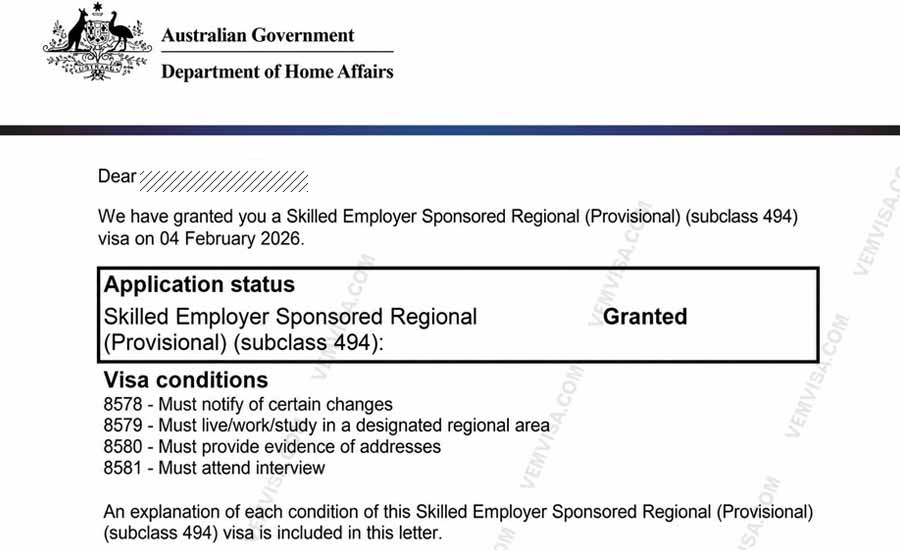
The subclass 494 is a regional employer sponsored visa for skilled workers nominated by an eligible business in a designated regional area. It allows a stay of up to five years and can lead to permanent residence through subclass 191 when the regional residence and other statutory requirements are satisfied.
The Employer Sponsored stream generally requires an eligible occupation, a positive skills assessment unless exempt, around three years of relevant experience, competent English, a genuine regional position and an applicant who is under 45 unless an exemption applies. A Regional Certifying Body must assess the annual market salary rate for the nominated role.
Regional does not necessarily mean remote: Perth, Adelaide, the Gold Coast, Canberra, Newcastle, Geelong and other major centres can qualify as designated regional locations. Sydney, Melbourne and Brisbane are not generally designated regional cities. Always check the actual workplace postcode.
Employer sponsored visa requirements
Requirements for the sponsored worker
- A genuine job offer and an eligible employer nomination.
- An occupation that qualifies under the relevant visa stream or labour agreement.
- The required work experience, qualifications and any necessary licensing or professional registration.
- A suitable skills assessment where the subclass, occupation or personal circumstances require one.
- The required English level, unless a valid exemption applies.
- Applicable age requirements for permanent or regional pathways.
- Health and character clearance for the applicant and relevant family members.
Requirements for the sponsoring employer
The employer sponsored visa requirements Australia imposes on businesses vary between subclasses, but generally include:
- Lawful business operation and, where required, approval as a standard business sponsor;
- A genuine skilled position consistent with business activity and operational need;
- A salary meeting the applicable threshold and the Australian market salary rate;
- Labour market testing where required and evidence of genuine recruitment efforts;
- Payment of the nomination charge and Skilling Australians Fund levy where applicable; and
- Ongoing recordkeeping, notification, employment and sponsorship compliance.

Small businesses can sponsor: there is no general rule that only large companies qualify. A small or new business must still demonstrate lawful operation, a genuine position, financial capacity and the ability to meet sponsorship obligations.
Other requirements
English and occupation requirements
The English standard depends on the visa and stream. Subclass 482 Skills in Demand applicants must meet the current sufficient-English requirements unless a valid passport, education, employment or agreement-based exemption applies. For accepted IELTS tests under the current subclass 482 table, the standard is at least 5.0 in each of Listening, Reading, Writing and Speaking.
Subclass 186 Direct Entry and subclass 494 Employer Sponsored generally require Competent English, subject to their specific exemptions. A score that is sufficient for a 482 visa does not automatically satisfy the later permanent or regional pathway.
Visa English and professional registration are different
Nurses, teachers, doctors and regulated trades may need a higher English score or additional licensing evidence even if the migration threshold is met.
Labour market testing & genuine position
Where labour market testing applies, the employer must show that it made a genuine effort to find a suitable Australian citizen or permanent resident before sponsoring an overseas worker. Home Affairs states that this generally involves advertising the position in Australia for at least four weeks in at least two advertisements, unless a valid exemption applies.
The advertisements, job description, salary, dates and recruitment outcome must satisfy the rules applying to the nomination. The business must also show that the role is genuine, fits its activities and has employment terms consistent with the Australian market salary rate.
For a subclass 494 Employer Sponsored nomination, regional certification is a separate step: a Regional Certifying Body assesses the annual market salary rate for the proposed position. A DAMA employer may also need endorsement from the relevant Designated Area Representative before accessing the agreement.

Visa salary thresholds 2026-27
For nominations lodged from 1 July 2026, the applicable minimum annual earnings threshold depends on the visa and stream:
| Visa or stream |
Minimum annual earnings threshold |
| Subclass 482 Core Skills |
AUD 79,423 |
| Subclass 482 Specialist Skills |
AUD 146,576 |
| Subclass 494 |
AUD 79,423 |
| Subclass 186, where the applicable nomination threshold applies |
AUD 79,423 |
These amounts are not recommended salaries. The position must also satisfy the Australian market salary rate: if an equivalent Australian worker would earn more than the threshold, the sponsored employee must generally receive that higher market rate. Labour agreements may include specifically approved concessions.
Do not use older figures: AUD 76,515 and AUD 141,210 were the 2025–2026 thresholds. They are not the standard thresholds for nominations lodged from 1 July 2026.
Visa fees & sponsorship costs
Government visa application charges
| Visa |
Main applicant |
Additional applicant aged 18+ |
Additional applicant under 18 |
| Subclass 482 |
AUD 4,015 |
AUD 4,015 |
AUD 1,005 |
| Subclass 186 |
AUD 6,140 |
AUD 3,070 |
AUD 1,535 |
| Subclass 494 |
AUD 6,140 |
AUD 3,070 |
AUD 1,535 |
For example, a couple with one child under 18 would ordinarily face base visa application charges of AUD 9,035 for subclass 482 or AUD 10,745 for subclass 186 or 494, before concessions, payment surcharges or other costs.
Employer-side sponsorship and nomination charges
- Standard Business Sponsorship application, where needed: AUD 420.
- Subclass 482 nomination: AUD 330.
- Subclass 186 nomination: generally AUD 540, subject to applicable exemptions.
- Regional certification, professional advice, recruitment and nomination-related expenses: vary by case.
Skilling Australians Fund levy
| Employer annual turnover |
Subclass 482 levy |
Subclass 186 or 494 levy |
| Less than AUD 10 million |
AUD 1,200 per nominated year |
AUD 3,000 once |
| AUD 10 million or more |
AUD 1,800 per nominated year |
AUD 5,000 once |
For a four-year subclass 482 nomination, the levy is ordinarily AUD 4,800 for a smaller employer or AUD 7,200 for a larger employer, payable at nomination. Certain sponsorship-related costs must not be unlawfully transferred to, or recovered from, the sponsored employee.
Applicants may also need to budget for English tests, skills assessments, medical examinations, police certificates, document translations and migration-agent or legal fees. Concessions and additional charges can apply in particular cases.
How to apply for an employer-sponsored visa
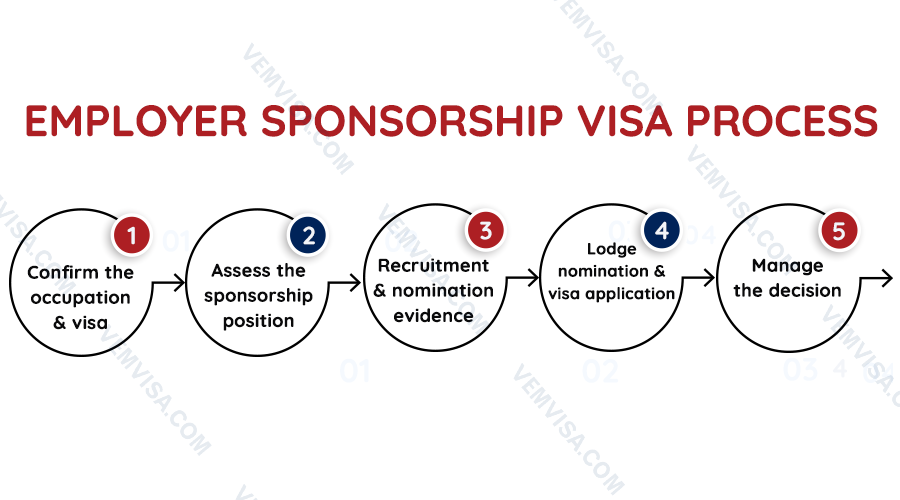
- Identify the correct visa: confirm the occupation, location, salary, experience, age and long-term residence objective.
- Check business eligibility: determine whether standard sponsorship approval, a labour agreement or regional endorsement is needed.
- Prepare the position: verify the occupation description, genuine role, market salary and any required labour market testing.
- Lodge the employer nomination: pay the nomination charge and applicable SAF levy, and obtain regional certification where required.
- Lodge the visa application: provide the worker’s identity, employment history, qualifications, English, skills assessment and family documents.
- Complete health and character checks: respond accurately to any Department request and track the case through ImmiAccount.
- Maintain compliance after grant: follow visa conditions, notify relevant changes and plan the permanent residence pathway early.
Labour agreements and DAMA pathways
A Designated Area Migration Agreement, or DAMA, is a framework negotiated between the Australian Government and a designated regional representative. An endorsed business may then access an individual labour agreement, allowing nomination under subclasses 482, 494 and, where the agreement permits, 186.
A DAMA may offer a broader occupation list or negotiated concessions relating to English, age, experience or salary. However, concessions are not automatic and depend on the region, occupation, employer endorsement and the precise agreement terms. The worker cannot apply for a DAMA independently without an eligible sponsoring employer.
Industry labour agreements provide another alternative where a particular sector has an approved framework. These can be relevant to employers facing persistent workforce shortages that standard sponsorship settings do not address.
PR pathways from employer sponsored visas
482 to 186
An eligible Skills in Demand or legacy TSS holder may move to the permanent subclass 186 Temporary Residence Transition stream after meeting the qualifying sponsored employment requirement, generally two years, and satisfying the nomination, age, English and other visa criteria.
Direct Entry may be an alternative where the worker independently satisfies its skills assessment, experience, occupation and age requirements. Neither pathway is automatic: a valid permanent nomination and successful visa application are still required.
494 to 191
A 494 holder may apply for the Permanent Residence (Skilled Regional) visa after meeting the applicable regional residence and other requirements, generally including at least three years on an eligible regional provisional visa. Conditions and eligibility should be checked before relocating or changing employers.
Direct PR through 186 visa
Where both the employer and applicant meet Direct Entry or Labour Agreement criteria from the outset, subclass 186 may deliver permanent residence without first spending years on a temporary employer-sponsored visa.

Common mistakes that delay sponsorship
- Using obsolete TSS information, old occupation lists or 2025 salary thresholds.
- Choosing an occupation based on its title without matching the worker’s actual duties.
- Assuming a salary meets requirements because it exceeds the threshold, while ignoring the market rate.
- Treating Sydney, Melbourne or Brisbane as regional, or failing to check a workplace postcode.
- Overlooking age exemptions, professional licensing, skills assessment or English-test validity.
- Failing to document recruitment, financial capacity, genuine need or regional certification.
- Requesting that the worker reimburse prohibited sponsorship or nomination expenses.
- Assuming permanent residence follows automatically from a 482 or 494 grant.
Need help choosing an employer-sponsored visa?
The right pathway depends on the occupation, salary, regional location, work history and permanent-residence objective. Review the employer and applicant requirements together before lodging.
Contact VEM Visa
FAQs
What is the best employer sponsored visa in Australia?
It depends on the worker’s eligibility and the employer’s objectives. Subclass 482 suits temporary sponsored work, subclass 186 grants permanent residence, and subclass 494 supports eligible regional positions with a later permanent pathway.
How much does an employer-sponsored visa cost in 2026?
The main applicant government charge is AUD 4,015 for subclass 482 and AUD 6,140 for subclass 186 or 494. Family members and employer sponsorship costs are additional.
What is the minimum salary for employer sponsored visas Australia?
From 1 July 2026, the standard Core Skills, 494 and applicable 186 nomination threshold is AUD 79,423. The 482 Specialist Skills threshold is AUD 146,576. The Australian market salary rate must also be met.
Does an employer-sponsored visa lead to permanent residence?
Subclass 186 is permanent from grant. Subclass 482 can provide a pathway to 186, while subclass 494 can lead to 191 after the relevant regional requirements are met.
Can I apply for employer sponsorship without a job offer?
No. These pathways require an eligible employer to nominate a genuine position. A job offer by itself is not sufficient unless sponsorship, nomination and visa criteria are also met.
Is there an age limit for employer-sponsored visas?
Subclass 482 has no general age cap. Subclasses 186 and 494 generally require applicants to be under 45 unless a relevant exemption or agreement concession applies.
Is Perth or the Gold Coast regional for a 494 visa?
Yes, both are classified as designated regional centres for relevant migration purposes. Eligibility still depends on the specific workplace postcode and all other subclass 494 requirements.
Can I change employers while holding a 482 visa?
Usually, the new employer must obtain an approved nomination. Eligible holders who cease sponsored employment may have up to 180 days at a time and 365 days in total across the visa period, subject to their individual visa conditions.

 VN
VN
 Người
đăng
Người
đăng Ngày
cập nhật:
Ngày
cập nhật:



